
If you’re grappling with a mysterious roof leak that seems localized near a bathroom or kitchen area, the culprit might be a failing vent boot or flashing. These pipe penetrations are prime leak zones on Florida roofs, especially when rubber collars crack under relentless sun or metal flashing corrodes from salt air. This blog covers how to diagnose, replace, and re-seal vent pipes, ensuring you stop water intrusion that can escalate to attic mold or ceiling damage. With the right boot, a good sealant, and a bit of care, your vents stay watertight amid Florida’s storms and humidity.
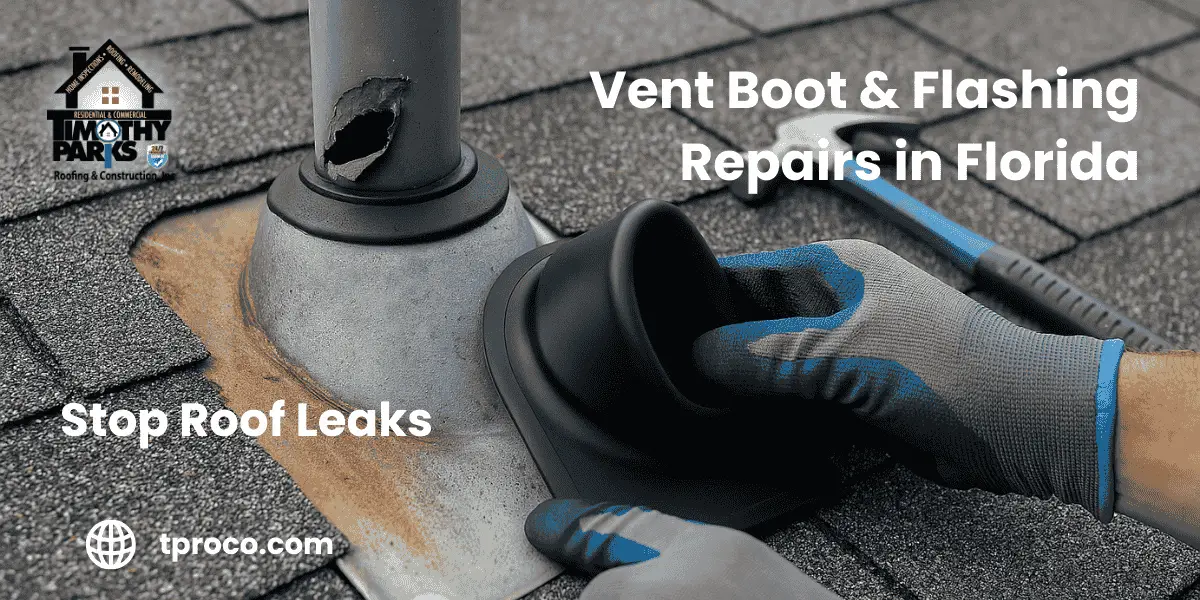
Recognizing Vent Pipe Leak Clues
Signs that a vent boot or flashing needs attention:
- Water Stains on Ceilings: Typically visible near the vent’s location. If the leak worsens during rain or windy storms, the vent collar may be letting water in.
- Cracked Rubber Collar: UV rays degrade the collar over time, causing splits or gaps around the vent pipe.
- Corroded Metal Flashing: Rust spots or flaking metal near the pipe’s base can create pinhole leaks. In Florida’s coastal areas, salt-laden air accelerates rust.
- Loose/Separated Sealant: Old caulk around the flashing or pipe top may peel away, letting water seep under.
Unlike a full roofing system that might show broader symptoms, vent pipe leaks can appear as a single wet spot or slow drip, easily mistaken for minor condensation. However, ignoring it leads to rotted decking, moldy insulation, and repeated interior stains. Investigating any localized dampness near pipes helps you catch these small but significant leaks early.
Removing the Old Boot & Flashing
To properly fix a vent leak, you’ll likely replace the entire boot assembly:
- Expose the Existing Boot: Carefully lift or remove shingles around the vent’s perimeter, revealing the metal flashing flange.
- Detach Nails or Screws: Pry out nails securing the flashing to the deck or shingles. If the metal is corroded, sections may break off—be thorough in clearing all pieces.
- Loosen the Collar from the Pipe: The rubber collar often sticks to the vent. Slice it gently with a utility knife if necessary.
- Check Deck & Underlayment: Inspect for dampness or rot in the decking below. Florida’s storms can push water down the pipe opening. If there’s significant rot, replace that section of wood.
- Clean the Surface: Scrape away old sealant or roofing cement. Wipe rust flakes or debris, leaving a smooth surface for the new boot.
By removing the boot entirely—rather than trying to patch cracks or re-caulk—it’s easier to ensure a fresh, watertight assembly. Partial fixes often fail when Florida’s next torrential downpour tests the roof. Taking time to inspect the underlayment and deck also prevents hidden damage from festering. Once the area is clear, you’re ready for the new boot and flashing kit that will safeguard against future leaks.
Installing a New Vent Boot & Flashing
Here’s the core of the repair:
Select the Right Boot:
In Florida’s climate, neoprene or silicone collars hold up better against UV. Ensure it’s sized for your pipe diameter. Some boots are adjustable or come with step rings you trim.
Slide the Boot Over the Pipe:
Position the flashing flange so it sits flush on the roof surface. The upper portion typically goes under the shingle course above, while the lower portion overlaps shingles below (for proper water flow).
Secure the Flange:
Nail or screw the flashing edges, being mindful of Florida’s wind-uplift codes. Some prefer ring-shank nails or screws with washers for a tighter seal.
Seal Around the Collar & Nail Heads:
Apply a bead of roofing sealant where the collar meets the pipe. Dab sealant on any exposed fasteners.
Re-Lay Shingles:
Slide them back into place, ensuring the top shingle layer covers the flange’s upper edge.
Double-check alignment so water naturally sheds around the vent. If installed incorrectly, water might pool against the flange, undermining your new seal. Once everything is nailed and sealed, a quick spray test or waiting for the next Florida shower helps confirm success.
Maintenance & Preventing Future Leaks
Even a new boot eventually needs upkeep in Florida’s climate:
- Annual Roof Inspection: While checking shingles or gutters, glance at vent collars. If you spot cracks or separation, re-seal or replace early.
- UV Protective Boots or Collars: Some products come with built-in UV shields. Alternatively, covering the rubber portion with a pipe “cap” extends its lifespan.
- Use Proper Sealants: Roofing-grade silicone or polyurethane stands up to the sun better than generic caulks.
- Check for Animal Damage: Occasionally, small critters gnaw on vent collars searching for warmth or condensation. Keep an eye out for chew marks.
Proactive maintenance ensures your new vent boot endures Florida’s sun and storms for years. By catching minor wear before it develops into cracks, you sidestep interior leaks and keep your roof system consistently watertight.
Conclusion
🔧 In Florida’s storm-prone environment, even a small vent pipe gap can unleash roof leaks leading to soaked insulation or stained ceilings. Replacing cracked rubber collars and corroded flashing is a straightforward fix that pays huge dividends in leak prevention. By selecting UV-resistant boots, properly overlapping shingles, and sealing every joint, you safeguard your attic from moisture infiltration. And if your roof is older, this simple upgrade might be part of a larger plan to ensure all penetrations—vents, chimneys, skylights—are equally protected. With a little diligence, you’ll keep water out of your rafters and interior, enjoying a leak-free roof for seasons to come.
Frequently Asked Questions (FAQ)
1Is a universal boot always suitable?Many fit multiple pipe sizes, but ensure the base flange is correct for your roof pitch and code requirements.2Can I just slather roofing cement on a cracked collar?That’s a temporary patch at best. A full collar or boot replacement is more reliable in Florida’s harsh conditions.3Should I remove the pipe to replace the boot?Typically no. The boot slides over the existing vent pipe. Only if the pipe is damaged or corroded might you replace it too.4Do I need a permit for vent boot replacement?Likely not for simple repairs. Full roof or structural changes might require one. Check local rules.5Will a metal vent cap help?Some top “caps” protect the rubber collar from direct UV. They can prolong the boot’s life, but correct installation is key.🔧 Fix Leaky Vent Pipes Before Florida Storms Hit!
Cracked vent boots and worn flashing cause hidden leaks! Learn how to repair vent boots, seal flashing, and keep your Florida roof leak-free and storm-ready.
#tproco #tppro #tprci #urro #rrfl
#VentBoot #FlashingRepair #FloridaRoofLeaks #OrlandoHomes #TampaRepair #SunshineState
Schedule a Roof InspectionAbout the Author

Timothy Parks
CEO
With 45+ years in roofing, 29 of them under Florida’s demanding climate, Timothy Parks (Licensed CBC059592, CCC1327217, HI4878) has tackled countless vent boot failures. From orchestrating the “Sparky’s D.IR.T. (Delve Into Rough Terrain)” MTB race to preventing roof leaks, Timothy’s organizational skill and attention to detail shine. He guides Florida homeowners through choosing top-grade flashing kits and UV-resistant collars, ensuring vent pipes stay sealed against sun, salt, and storms. Quick, correct repairs are his mantra—so your roof remains an impenetrable barrier even in hurricane-level gusts.