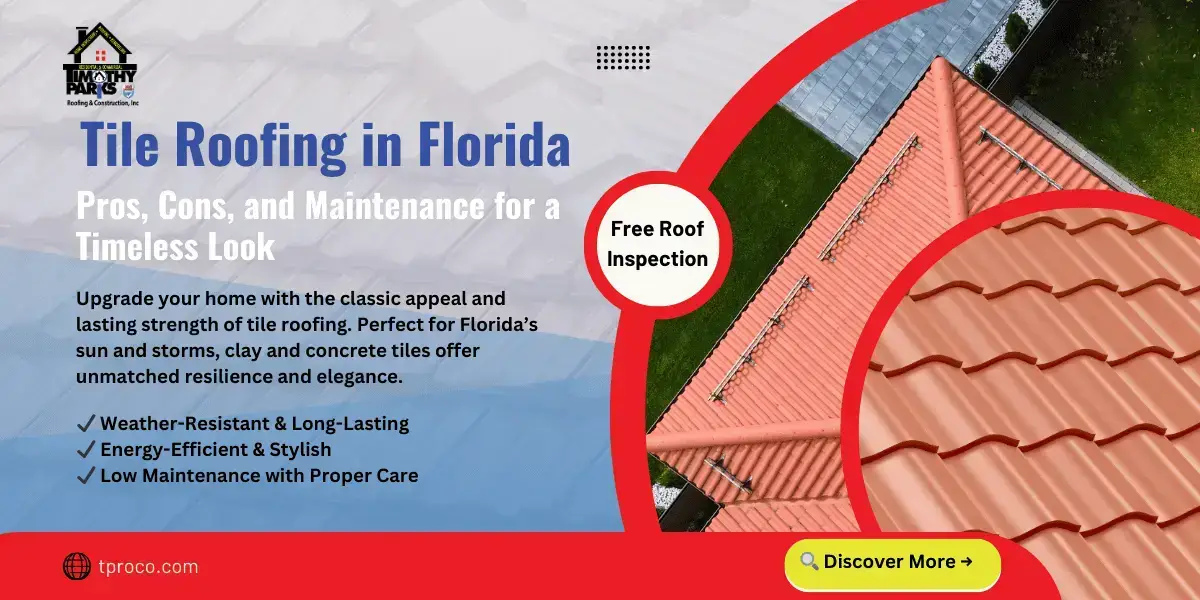
Tile roofs have long been a signature of Mediterranean or Spanish-style homes, but their appeal extends far beyond aesthetics. In Florida, where the sun’s rays can be relentless and storms can batter even the sturdiest roofs, tiles—made of clay, concrete, or ceramic—offer a winning combination of durability and charm. Yet, like any roofing choice, tile roofs require careful consideration of maintenance needs, installation costs, and climate-specific demands. In this blog, we’ll explore the pros and cons of tile roofing in Florida, discuss critical upkeep tips, and offer guidelines to help you determine if this timeless option is the perfect fit for your home.
Why Tile Roofing Remains Popular in Florida
Tile has deep roots in architectural history, dating back to ancient civilizations. Today, Florida homeowners often choose it for:
1. Aesthetic Versatility
Mediterranean Flair: Evokes a classic, coastal vibe reminiscent of European villas.
Variety of Colors & Shapes: Clay and concrete tiles can mimic slate or wood shakes, catering to diverse design tastes.
2. Durability
Longevity: Properly maintained tile roofs can last 50 years or more.
Resistance: Many tile products boast wind ratings up to 150 mph—a vital consideration in hurricane zones.
3. Temperature Regulation
Natural Insulation: The space under tiles promotes airflow, helping dissipate heat.
Reflective Surfaces: Light-colored or specially coated tiles can reduce roof temperatures, easing air conditioning loads.
Types of Tiles Commonly Used in Florida
1. Clay Tiles
Classic Look: The iconic barrel shape or “S” mission tiles epitomize Spanish architecture.
Color Retention: Natural clay tends to hold its hue longer, resisting fading under intense sunlight.
Fragility & Weight: Although quite durable, clay can crack under heavy impact, and the heavier load might require reinforced roof framing.
2. Concrete Tiles
Budget-Friendly: Generally less expensive than clay while offering similar aesthetics.
Customizable Finishes: Available in a wide range of colors and textures, from smooth to rough-hewn.
Heavier Weight: Concrete tiles can be even heavier than clay, so ensure your home’s structure can support them.
3. Ceramic Tiles
Glazed Surfaces: The glaze adds a glossy finish that’s highly resistant to mold and mildew.
Moderate Cost: Typically priced between clay and concrete, though certain custom glazes can be pricier.
Brittleness: Glazed ceramic can chip if struck hard or if walked on improperly.
Pros & Cons of Tile Roofing in Florida
1. Pros:
Wind Resistance: Properly installed tiles can endure high wind speeds, crucial during hurricanes.
Fire Resistance: Tiles are non-combustible, adding an extra layer of safety.
Longevity: With routine maintenance, tile roofs can easily outlast asphalt shingles.
2. Cons:
Higher Initial Cost: Expect to pay more upfront than for asphalt or metal roofs.
Weight Considerations: Some structures need reinforcement to safely handle the additional load.
Installation Complexity: Tile requires skilled labor, and improper installation can lead to leaks or tile breakage.
Installation Best Practices
A well-executed tile roof project hinges on correct planning and execution:
1. Structural Assessment
Professional Evaluation: Engage an engineer or qualified roofer to verify your home can handle the added weight.
Permitting: Florida building codes may demand additional documentation for heavier roofing materials.
2. Underlayment & Waterproofing
High-Quality Membranes: Peel-and-stick underlayment or synthetic products provide superior protection against wind-driven rain.
Flashing Details: Seal around chimneys, vents, and valleys carefully, as water can penetrate if flashing is subpar.
3. Tile Fastening & Alignment
Code Compliance: Tiles must meet Florida’s wind uplift requirements. Depending on your region, expect minimum 110–150 mph ratings.
Battens vs. Direct Deck: Some tile systems use wood battens to secure the tiles, while others attach directly to the deck. Consult with experienced installers.
4. Ventilation
Attic Cooling: Adequate intake and exhaust vents mitigate heat buildup, prolonging the life of both underlayment and the tile itself.
Moisture Management: Proper airflow helps reduce humidity, curbing mold growth under tiles.
Maintenance Tips to Maximize Roof Life
1. Regular Cleaning & Debris Removal
Leaves & Twigs: Accumulations can trap moisture against tiles. Use a soft brush or blower to clear debris.
Algae & Moss: Consider algaecide treatments or zinc strips along ridges to deter growth.
2. Routine Inspections
Cracked or Loose Tiles: High winds, falling branches, or even foot traffic can cause damage. Replacing individual tiles promptly prevents leaks.
Underlayment Checks: If possible, look for any water stains or signs of deterioration in the attic.
3. Gentle Foot Traffic
Walk Smartly: Avoid stepping on the middle of tiles, which is their weakest point. Use walk boards if you must traverse the roof.
Hire Pros: For larger repair jobs or inspections, a licensed contractor with tile experience can prevent accidental breakage.
4. Gutter Maintenance
Clog Prevention: Ensure gutters are free-flowing to avoid water pooling near eaves.
Tile Overhang: Check that tile edges don’t hamper water flow into gutters. Minor adjustments or drip edges might be needed.
Conclusion
🏠 Tile roofing in Florida blends timeless beauty with robust performance, a combination that appeals to homeowners looking for longevity and classic aesthetics. From clay’s rich, natural hues to the customizable finishes of concrete, tile options can suit a variety of architectural styles. While the higher initial cost and heavier weight might deter some, the long-term benefits—excellent wind resistance, impressive lifespan, and fire safety—often offset these concerns. By focusing on proper installation, regular upkeep, and mindful foot traffic, you’ll ensure your tile roof remains as stunning as it is protective for decades to come.
Frequently Asked Questions (FAQ)
1Are tile roofs loud during rainstorms?Generally, tile roofs aren’t much louder than other materials. Adding underlayment and proper insulation helps dampen any noise from rain.2Can tiles be painted or re-colored?Yes, specialized coatings and paints exist, especially for concrete tiles. However, natural clay tiles often hold color better without repainting.3Do tile roofs require special insurance coverage in Florida?Some insurers may offer discounts if your tile roof meets certain wind ratings, but this varies. Always consult your insurance provider.4Will adding tile significantly increase my home’s property value?Many buyers appreciate the longevity and style of tile roofing, potentially boosting curb appeal and resale value, but market conditions also play a role.5How do I safely walk on a tile roof for DIY projects?Use cushioned shoes, distribute your weight on the edges of tiles, or use walking boards. For major tasks, consider hiring professionals to reduce breakage risks.Thinking About a Tile Roof?
Have questions about the different tile materials or unsure about weight requirements? Share your thoughts below or join us on social media with:
#tproco #tppro #tprci #urro #rrfl
#TileRoof #FloridaHomes #RoofMaintenance#TampaUpgrades #OrlandoRenovations #SunshineState
Schedule a Roof InspectionAbout the Author

Timothy Parks
CEO
For over 45 years, Timothy Parks has specialized in delivering top-tier construction and roofing solutions, with 29 years focused on Florida’s climate-specific needs. Licensed under CBC059592 (Builder), CCC1327217 (Roofer), and HI4878 (Home Inspector), Timothy merges technical expertise with a passion for community, frequently hosting mountain bike races that bring neighbors together in the great outdoors.