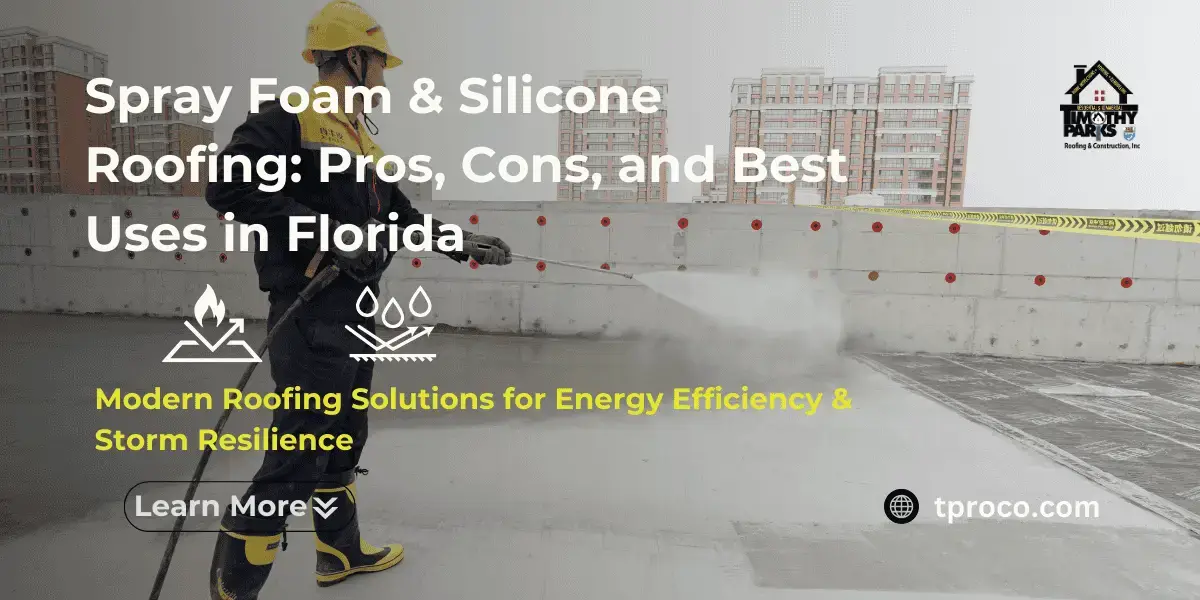
🌡️ Florida’s blazing sun and periodic torrential rains can pose serious challenges for traditional roofing systems, particularly on flat or low-slope structures. Enter spray foam (SPF) and silicone roofing—two modern options that promise improved insulation, seamless waterproofing, and energy savings. Whether you’re a commercial property owner looking to reduce cooling costs or a homeowner wanting a leak-free, durable roof, these high-tech solutions may offer exactly what you need. But are they right for every building? In this blog, we’ll weigh the pros and cons, explore key installation steps, and offer maintenance guidelines to help you determine if spray foam or silicone roofing fits your Florida property’s demands.
Understanding Spray Foam (SPF) Roofing
Spray Polyurethane Foam (SPF) is a two-part liquid that expands into a foam layer upon application:
1. How SPF Roofing Works
Chemical Reaction: Two liquid components (isocyanate and polyol) mix at the spray gun tip, expanding on the roof’s surface.
Seamless Membrane: The foam forms a continuous layer that eliminates many traditional roofing seams and joints.
2. Advantages of SPF in Florida
High R-Value Insulation: SPF reduces heat transfer, potentially slashing cooling costs in Florida’s hot climate.
Lightweight & Self-Flashing: It naturally conforms to roof contours, sealing around pipes, vents, and edges without separate flashing components.
Quick Installation: Large surfaces can be covered relatively fast, minimizing downtime for businesses.
3. Drawbacks & Challenges
UV Sensitivity: SPF must be topped with a UV-protective coating—often silicone or acrylic—to prevent degradation.
Skilled Application Required: Foam thickness and consistency rely on the applicator’s expertise. Mistakes can cause voids or uneven coverage.
Vulnerability to Damage: While moderately durable, SPF can dent or gouge if impacted by sharp objects or hail.
Spotlight on Silicone Roof Coatings
Silicone coatings can be used alone (on certain substrates) or as a topcoat over SPF or other roof types:
1. Properties of Silicone
Excellent Water Resistance: Silicone can handle ponding water, making it ideal for flat roofs in rainy Florida.
Highly UV Stable: Resists chalking, cracking, or brittleness under intense sunlight.
Reflective Surface: White or light-colored silicones reflect solar heat, contributing to lower indoor temperatures.
2. Common Applications
Restoration Projects: Worn single-ply or metal roofs can be recoated with silicone for extended life.
SPF Topcoat: Seals and protects foam from UV damage, ensuring a watertight finish.
Minimal Tear-Off Needed: In many cases, a silicone membrane can be applied over existing roofs if the substrate is sound.
3. Potential Downsides
Slippery When Wet: Silicone’s smooth surface can be hazardous for foot traffic, particularly on sloped areas.
Periodic Recoating: Over time, the silicone layer may thin, requiring a fresh application to maintain waterproofing.
Surface Prep: Any existing contamination—grease, loose debris—must be thoroughly removed for proper adhesion.
Comparing SPF and Silicone Roofing in Florida
Climate Suitability
SPF: Excels in hot climates due to its insulating properties but needs a high-quality topcoat to withstand Florida’s intense sun.
Silicone: Known for handling standing water from heavy rainfall; extremely UV-resistant and reflective.
Installation Complexity
SPF: Requires specialized spraying equipment and skilled applicators. Weather conditions (wind, humidity) can affect foam curing.
Silicone: Generally simpler to roll or spray on, though surface prep is critical. Less labor-intensive than tearing off an old roof.
Cost & Longevity
SPF: Higher upfront cost than some traditional systems. If well-maintained, it can last 20–30 years before refoaming or recoating.
Silicone: Often cost-competitive for re-coating projects. A new silicone membrane can last 10–20 years, depending on thickness and conditions.
Maintenance Requirements
SPF: Regular inspections to catch potential foam damage. Topcoat reapplication is usually needed every 10–15 years.
Silicone: Occasional cleaning to remove dirt buildup; recoat intervals vary by product brand and environmental exposure.
Installation Best Practices
1. Roof Inspection & Prep
Identify Substrate Issues: Roof deck repairs, existing membrane adhesion, or moisture infiltration must be resolved first.
Clean, Dry Surface: Both SPF and silicone require a contaminant-free surface for optimal bonding.
2. SPF Application
Temperature & Weather: Ideal conditions are warm, dry, and low-wind—common in many parts of Florida outside the rainy season.
Layer Control: Achieving the right foam thickness (often 1–2 inches) ensures both insulation and ponding-water resistance.
Protective Coatings: Immediately after foam cures, installers apply a UV-stable topcoat to seal it.
3. Silicone Coating
Primer (If Needed): Some substrates require a primer to enhance silicone adhesion.
Even Thickness: Aim for uniform coverage, typically 20–30 mils thick, though specs vary by manufacturer.
Curing Time: Silicone often cures within a few hours, but humidity and temperature can extend the process.
4. Inspection & Quality Control
Adhesion Tests: Many contractors perform peel tests or sample cuts to confirm the coating bond.
Final Thickness Check: Using a mil gauge ensures each section has the specified coverage.
Drainage Assessment: Inspect for low spots that could trap water beyond recommended durations.
Maintaining SPF & Silicone Roofs in Florida
1. Biannual Inspections
Surface Integrity: Look for blisters, cracks, or punctures—especially after storms.
Seams & Penetrations: While SPF roofs are seamless, transitions around HVAC units or drains need checks for deteriorated sealants.
2. Routine Cleaning
Debris Removal: Leaves, branches, or ponded water can accelerate wear. Gently sweep or hose off surfaces as needed.
Mold/Algae Growth: In humid areas, mild cleaners can remove biological growth without damaging the topcoat.
3. Re-Coating Schedule
SPF: Inspect the topcoat for thinning or UV damage. Reapply before foam exposure occurs.
Silicone-Only Systems: A fresh layer every 10–20 years, depending on site conditions, helps maintain waterproofing.
4. Professional Repairs
Prompt Fixes: Address any cuts or gouges in SPF quickly to prevent moisture intrusion.
Warranty Compliance: Some manufacturers require licensed professionals for repairs to keep warranties valid.
Conclusion
🌡️ For Florida’s flat or low-slope roofs, spray foam and silicone systems offer compelling advantages—top-tier insulation, seamless waterproofing, and reduced risk of leaks. However, choosing the right system demands careful consideration of your roof’s condition, budget, and long-term maintenance expectations. If you decide on SPF, be prepared for a precise installation process and a protective topcoat to guard against UV damage. For silicone-based solutions, make sure your existing substrate can support the coating and plan for periodic re-coatings to keep everything watertight. Ultimately, whether you’re upgrading a commercial property or a modern home, these advanced roofing technologies can help you stay cool, dry, and storm-ready in the Sunshine State’s challenging climate.
Frequently Asked Questions (FAQ)
1Does spray foam roofing add structural strength to my roof?It can provide some additional rigidity, but it’s not a substitute for proper decking or structural repairs. SPF mostly enhances insulation and waterproofing.2Will silicone make my roof too slippery for maintenance workers?Silicone coatings can be slick when wet. Some manufacturers offer textured or grit-added finishes to improve traction.3How do I know if my roof is suitable for spray foam?An initial inspection is crucial. The deck must be stable, and any significant moisture infiltration or deck damage must be resolved prior to foam application.4Can silicone coatings fix leaks on a metal roof?Yes, in many cases. However, you must repair any major rust or panel damage first. The silicone layer then provides a continuous membrane over the metal.5Is there a smell or off-gassing with SPF?During application, there can be a noticeable odor. Proper ventilation and experienced contractors minimize this. Once cured, SPF is generally odor-free and safe.Curious About Spray Foam or Silicone?
Have you considered SPF or silicone roofing in Florida? Share your questions or experiences below, and don’t forget to tag us using:
#tproco #tppro #tprci #urro #rrfl
#SPFRoofing #SiliconeRoof #FloridaBuilding#TampaConstruction #OrlandoContractors #SunshineState
Schedule a Roof InspectionAbout the Author

Timothy Parks
CEO
With 45+ years in construction and roofing—29 of them under Florida’s sun—Timothy Parks has extensive experience with both traditional and cutting-edge roof systems. Holding licenses CBC059592 (Builder), CCC1327217 (Roofer), and HI4878 (Home Inspector), Timothy also fosters local community spirit by hosting mountain bike races across the state.