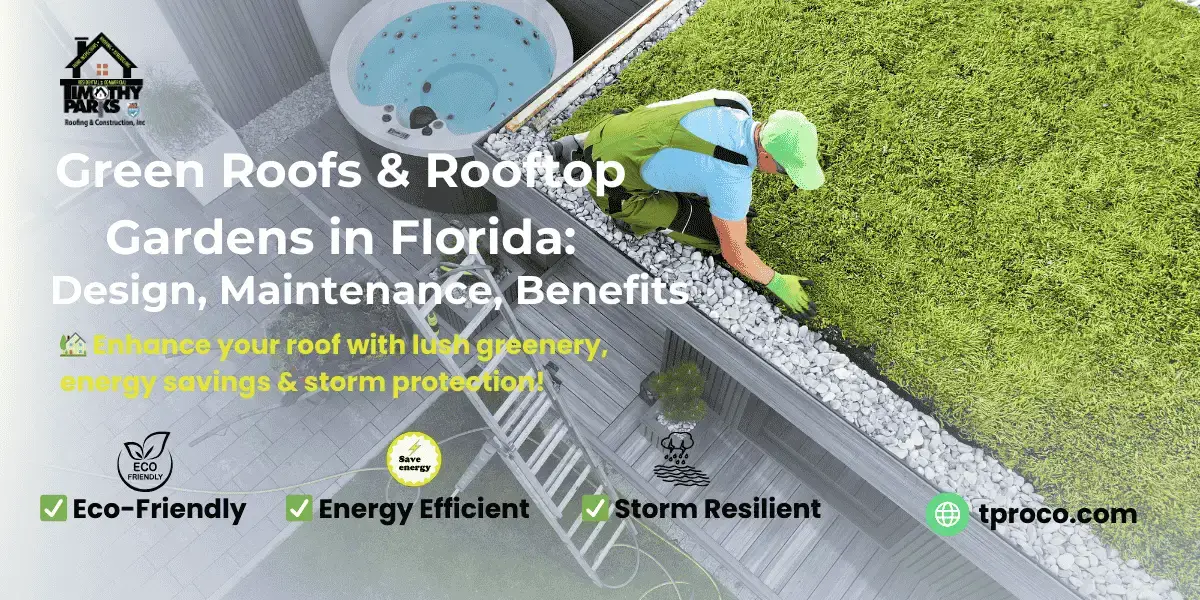
🌱 With scorching sun, tropical downpours, and plenty of storms, Florida roofs must endure a lot. But what if your roof could simultaneously shield your home and cultivate a mini-ecosystem on top? Enter green roofs and rooftop gardens—an increasingly popular choice for eco-conscious Floridians. Beyond improving curb appeal, they insulate buildings, mitigate stormwater runoff, and even attract local wildlife. Yet installing a living roof in Florida’s harsh climate requires the right design approach, plant selection, and long-term upkeep. In this blog, we’ll delve into everything you need to know to transform your roof into a thriving green oasis, from structural prerequisites to irrigation strategies.
The Rise of Green Roofs in Florida
Green roofs (or rooftop gardens) aren’t just a fad—they’re part of a global push toward sustainability. In Florida specifically:
1. Energy Efficiency Gains
Natural Insulation: Soil layers and vegetation dampen heat flow, cutting cooling costs in Florida’s hot climate.
Reduced Urban Heat Island Effect: Cities like Miami or Tampa experience intense heat buildup; green roofs help reflect and absorb less solar radiation.
2. Stormwater Management
Rainwater Absorption: A well-designed green roof can absorb 50–90% of rainfall, easing pressure on storm drains.
Slowing Runoff: This helps mitigate localized flooding during Florida’s sudden downpours or tropical storms.
3. Biodiversity & Air Quality
Habitat Creation: Even small rooftop gardens support pollinators (bees, butterflies) and local bird species.
Pollution Filtering: Plants capture particulate matter and produce oxygen, improving surrounding air quality.
Types of Green Roof Systems
Extensive Green Roof
- Shallow Soil Layer (2–6 inches): Lightweight medium suitable for hardy succulents, grasses, or low-maintenance groundcovers.
- Minimal Maintenance: Typically no public access, mainly for insulation and stormwater benefits.
- Lower Weight: Ideal for retrofitting existing roofs, provided the structure can handle moderate loads.
Intensive Green Roof
- Deeper Soil Layer (6 inches to several feet): Supports shrubs, small trees, or elaborate garden landscapes.
- Accessible Rooftop Gardens: People can walk, sit, or even grow vegetables.
- Higher Structural Demands: Heavier loads require engineering analysis, stronger decking, and advanced drainage systems.
Structural & Design Considerations
1. Load-Bearing Capacity
Professional Assessment: A structural engineer must confirm your roof can handle the extra weight of soil, plants, and water.
Potential Reinforcement: Installing stronger beams or deck materials if you plan an intensive garden.
2. Waterproofing & Root Barriers
Roof Membrane: An extra-robust, waterproof layer is critical; look for products specifically rated for green roof applications.
Root Barrier Layer: Prevents plant roots from penetrating or damaging the membrane.
3. Drainage & Irrigation
Drainage Mats or Layers: Help excess water flow off the roof without waterlogging plants.
Irrigation Systems: Florida’s dry spells demand drip irrigation or sprinklers, though many native plants thrive with minimal watering once established.
4. Thermal & Moisture Management
Insulation Integration: Place insulation under the waterproof membrane or within the soil layers, depending on design.
Ventilation: Ensure attic or underlying building ventilation remains sufficient; too much trapped moisture can lead to mildew.
Choosing Plants for Florida’s Climate
Plant selection can make or break your rooftop garden:
1. Heat & Drought Tolerance
Native Species: Florida-friendly options like blanket flower, beach sunflower, or coontie handle intense sun and sporadic rainfall.
Succulents: Varieties like sedum or aloe store water in leaves, thriving under direct sun.
2. Wind Resistance
Low-Profile Growth: Compact or mat-forming plants resist wind uplift better than tall, spindly ones.
Secure Root Systems: Deep or fibrous roots anchor plants, reducing the chance they blow away during storms.
3. Salinity Considerations
Coastal Areas: If you’re near the ocean, salt-tolerant plants like sea purslane or cordgrass may fare better against salt-laden breezes.
4. Maintenance Level
Extensive Roofs: Focus on hardy groundcovers and native grasses requiring minimal fertilization or pruning.
Intensive Gardens: For more elaborate designs with shrubs or ornamental flowers, budget time (or professional services) for ongoing care.
Step-by-Step Installation Process
1. Consult a Green Roof Expert
Engineering Review: Confirm structural load capacity and necessary reinforcements.
Design Phase: Determine the best system type—extensive vs. intensive—plus irrigation and drainage layout.
2. Roof Preparation
Repair & Clean: Ensure the roof deck is sound, free of leaks, and meets local building codes.
Waterproofing & Root Barrier: Apply layers to protect the deck from moisture infiltration and root damage.
3. Drainage & Growth Medium
Drainage Layers: Install specialized mats or boards to facilitate water flow and aeration.
Substrate Mix: Use a lightweight blend of soil, perlite, and organic matter—standard topsoil is too heavy and may compact easily.
3. Planting
Layout & Spacing: Consider mature plant size and wind patterns. Place taller elements near wind-shielded areas.
Initial Irrigation: Monitor soil moisture closely during the first few months to help plants establish roots.
4. Final Inspection
Leak Checks: Ensure no water seeps into the structure, especially around penetrations or edges.
Edge & Safety Features: Install railings or parapets for any areas with foot traffic, if required by code.
Maintenance & Long-Term Care
1. Irrigation Management
Seasonal Adjustments: Florida’s rainy season may require less watering, while dry spells need more frequent irrigation.
Smart Sensors: Soil moisture sensors or timers can automate watering schedules.
2. Weeding & Pruning
Regular Inspections: Remove invasive or unwanted plants to prevent competition with your chosen vegetation.
Trimming: Prevent overgrowth that could shade lower plants or stress the drainage system.
3. Fertilization & Soil Health
Light Feeding: Excess fertilizer can promote unwanted growth or algae, so use slow-release, eco-friendly products sparingly.
pH Balance: Test soil periodically—some plants prefer slightly acidic conditions.
4. Storm Preparedness
Securing Loose Objects: Furniture, decorative items, or planters should be anchored or moved indoors before storms.
Post-Storm Inspection: Check for uprooted plants, clogged drains, or membrane punctures after hurricanes or major wind events.
Conclusion
🌱 Green roofs and rooftop gardens offer a wealth of benefits for Florida homeowners—from lowering energy costs and easing stormwater runoff to enhancing biodiversity in urban environments. Yet success requires mindful planning: ensuring your roof can support the extra load, choosing the right waterproofing layers, and selecting hardy, Florida-friendly plant species. With proper installation and a bit of ongoing maintenance, you’ll enjoy cooler indoor temperatures, a healthier environment, and a stunning view that stands out in any neighborhood. Whether you opt for a simple succulent cover or a full-blown garden paradise, a green roof represents a forward-thinking approach to sustainable living in the Sunshine State.
Frequently Asked Questions (FAQ)
1Are green roofs suitable for pitched roofs or only flat roofs?While flat or low-slope roofs are simpler to convert, some green roof systems can adapt to moderate slopes. Structural considerations and specialized layering are key.2Do green roofs attract pests or insects?Not typically more than a standard garden. Encouraging beneficial insects (like pollinators) can actually enrich local biodiversity without causing indoor pest problems.3Can I install a green roof myself, or do I need a professional?DIY is possible for small, extensive systems, but professional guidance is highly recommended—especially for structural evaluations and waterproofing layers.4Will a green roof void my existing roof warranty?It depends. Some warranties permit green roof additions if installed per manufacturer guidelines. Always check with the roof system’s provider before proceeding.5How much does a green roof cost compared to a regular roof?Costs can be higher upfront (2–3 times more) due to extra layers, structural needs, and plant materials. However, energy savings, extended membrane life, and environmental benefits may justify the investment over time.Ready to Go Green Up Top?
Share your rooftop garden dreams or ask questions about Florida-friendly plant choices! Join the conversation with:
#tproco #tppro #tprci #urro #rrfl
#GreenRoof #RooftopGarden #SustainableLiving#FloridaHomes #TampaGardening #OrlandoEco
Schedule a Roof InspectionAbout the Author

Timothy Parks
CEO
Boasting 45+ years of roofing and construction expertise—29 of them concentrated in Florida—Timothy Parks is committed to fortifying homes against extreme weather. Licensed as CBC059592 (Builder), CCC1327217 (Roofer), and HI4878 (Home Inspector), Timothy blends hands-on skill with a passion for community, including organizing mountain bike races to unite local enthusiasts.