
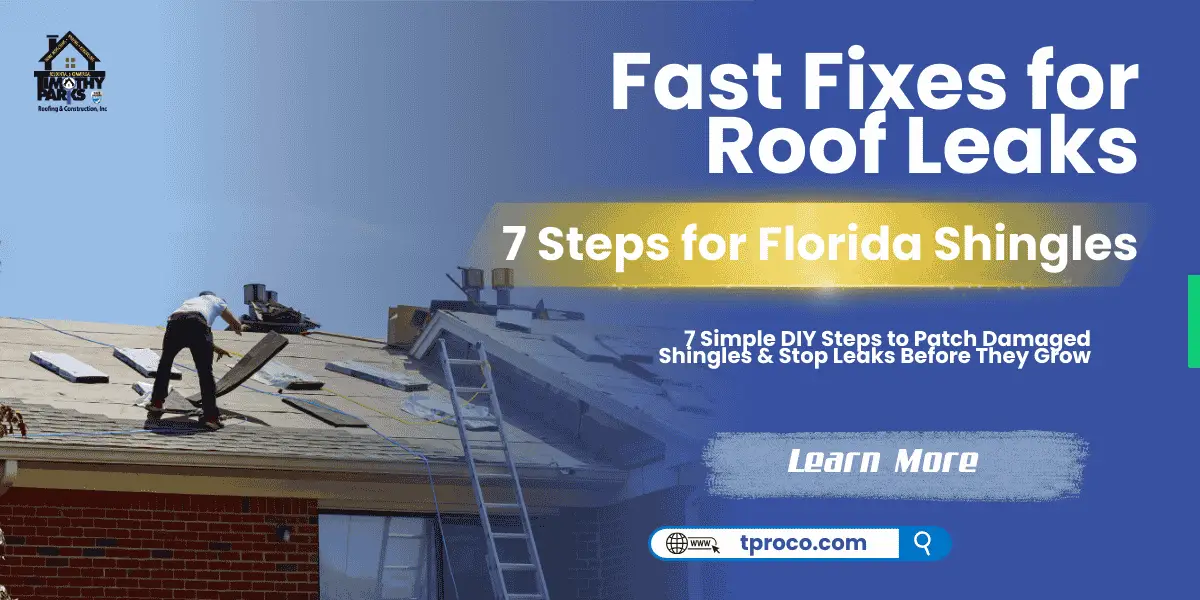
Not every roof leak demands a full overhaul or licensed contractor—sometimes, a single torn shingle or tiny gap near flashing is to blame. In Florida’s environment, though, even small leaks can escalate if left unattended. Warm temperatures and high humidity accelerate mold growth, while torrential rain can exploit the tiniest flaw. This blog walks you through a 7-step patching process tailored for minor roof issues in the Sunshine State. You’ll learn to assess damage, gather proper materials, prep the surface, and apply a lasting fix that stands up to sun, wind, and rain. Whether you’re a confident DIYer or trying to stabilize the situation until pros arrive, these steps help you keep your home dry without risking bigger water intrusion down the line.
1. Assess the Extent of Damage
Before grabbing tools, define how extensive your leak really is. Look for:
- Number of Affected Shingles: Is it just one tab curling up, or do you see multiple areas missing granules or torn edges?
- Attic Check: Peek inside for wet insulation or water stains. If the decking feels soft or rotted, your “small leak” might be bigger than you realize.
- Flashing Nearby: Check around vents, chimneys, or dormers. Sometimes a small gap in flashing masquerades as a shingle leak.
If the damage is localized—like one to three shingles or a tiny corner around a pipe boot—DIY patching can work. But if you see deep deck rot, multiple missing shingles, or water infiltration around major structures, consider a more thorough approach or professional help. Florida’s storms can turn minor vulnerabilities into major headaches with just one intense downpour.
2. Gather Tools & Materials
You’ll need specific items to ensure your patch lasts through Florida’s extreme conditions:
- Replacement Shingles: Match your current style and color as closely as possible. Check local suppliers or keep leftover bundles if you recently installed the roof.
- Roofing Nails (Galvanized/Stainless): Avoid cheap nails that might rust under Florida’s high humidity.
- Roof Sealant/Adhesive: Opt for a polyurethane or tri-polymer formula that withstands UV exposure and tropical heat. Roofing cement can be used sparingly but might crack over time.
- Pry Bar & Utility Knife: For carefully lifting surrounding shingles and trimming replacements.
- Heat Gun (Optional): Helps soften older shingles so you can lift them without cracking the seal strip, especially if you’re working in cooler weather.
Having the right materials on hand streamlines the repair. If you rush up there with mismatched shingles or subpar nails, the fix may fail soon—wasting your effort and letting water right back in.
3. Wait for the Right Weather Window
Florida’s climate can be tricky—sudden rainstorms or high heat can jeopardize your patching attempt. Ideally, pick a day with:
No Immediate Rain Forecast:
Sealing or adhering shingles requires a dry surface to bond properly. A surprise shower can wash away uncured sealant.
Moderate Temperature:
Extremely hot shingles may become too soft, risking damage when you pry them up. Cooler conditions (morning or late afternoon) help, but avoid climbing if roof surfaces are still damp from dew or an earlier shower.
Low Winds:
Trying to nail new shingles in gusty conditions can misalign them. Also, wind-blown debris might get stuck under your repair mid-process.
Even if you’re pressed by a small leak, a quick tarp for a day or two might be safer than rushing repairs in hazardous conditions. Florida storms can appear unexpectedly, so keep a watchful eye on the sky or local radar apps. Proper timing ensures a stable environment for your patch to adhere correctly and last longer.
4. Prep the Damaged Area
Preparation is often where DIYers skimp. Thoroughly addressing debris, old sealant, or hidden moisture sets the stage for a successful patch:
Lift Surrounding Shingles Gently:
Use a pry bar to loosen the adhesive seal strip on the shingle above. Slide it in horizontally to avoid cracking or tearing. If shingles are stubborn, a heat gun on low can soften the tar strip for easier separation.
Remove Old Nails:
If you see nails from the damaged shingle or ones that are backing out, pull them carefully. This prevents leftover fasteners from puncturing your new shingle or distorting alignment.
Scrape Away Old Sealant:
Dried lumps of roofing cement can create uneven surfaces. A putty knife or chisel can peel off hardened blobs. Work patiently—rushing might tear the underlayment or adjacent shingles.
Check for Moisture Underneath:
If the decking feels damp, wait until it’s fully dry to apply new materials. Trapping moisture under a patch can lead to mold or rot in Florida’s heat.
Skipping these steps might save a few minutes but can sabotage the entire job if lumps of sealant cause a poor bond or leftover nails punch through your new shingles. A smooth, clean surface is key to a tight seal—critical in a region that sees sideways rain and swirling winds.
5. Position & Secure the Replacement Shingle
Now that you’ve cleared the area, it’s time to place the new shingle:
Align the Tabs:
For 3-tab shingles, match the cutouts with the existing row. For architectural shingles, match the pattern as closely as possible. This ensures consistent water flow and better aesthetics.
Nailing:
Insert 2–4 nails (depending on shingle size) along the nail line. Typically, Florida’s high-wind recommendations suggest at least 4 nails per shingle. Drive nails flush but avoid sinking them too deep—overdriven nails cut into the shingle surface, leaving it vulnerable.
Adjacent Shingle Seals:
If you lifted the shingle above, re-nail or re-seal it as needed. A dab of roofing sealant under each tab helps secure them—especially vital in windy coastal areas.
Watch your nail placement carefully. Missing the decking or hitting a seam in plywood can reduce holding power. If you’re uncertain you’ve hit solid wood, reposition the nail half an inch horizontally, ensuring it’s anchored. The last thing you want is for a single poor nail to pop out in the next gust, peeling the entire repair upward.
6. Seal Edges & Reinforce
Once nailed, it’s time to lock everything down against Florida’s sneaky moisture:
Under-Shingle Seals:
For the shingle above your patch, lift it slightly and apply a thin bead of roofing adhesive near the tab corners. Press it down so the adhesive spreads evenly.
Side & Top Edges:
If your new shingle is near a sidewall or chimney, blend in new flashing or reseal existing flashing. Gaps as small as 1/8 inch can let wind-blown rain in. Use a flexible sealant rated for roofing, not basic caulk that may crack under UV exposure.
Check Overlaps:
Ensure no part of the new shingle is raised. If you see an edge not lying flat, weigh it down with a brick or roofing shoe for a few hours, giving the adhesive time to bond in Florida’s warmth.
Excess sealant can trap debris or block water flow, so aim for a neat application that’s flush with the shingle’s texture. This final “lockdown” phase means your patch is less likely to peel, leak, or degrade quickly.
7. Final Inspection & Optional Hose Test
Just as you wouldn’t skip a test drive after fixing a car, verifying your new patch is crucial:
- Visual Scan: From ground level or a stable ladder, check alignment, shingle color match, and overall flatness. A shingle corner sticking up is a red flag.
- Attic Observation: If accessible, peek inside for any sign of fresh drips or dampness after your fix.
- Hose Test: Lightly spray water over the repair area (starting from below, moving upward). Have a helper watch inside the attic for leaks. Keep the flow moderate—mimicking rainfall rather than blasting at high pressure.
If all remains dry, you’ve likely handled your minor leak successfully. Just remain vigilant in upcoming weeks—Florida’s weather can be a final exam. If the patch fails under real storm conditions, a professional assessment might be your next step.
Conclusion
⛑️ Minor roof leaks in Florida can still wreak havoc when heavy rain and relentless humidity push moisture deep into your home’s structure. By following a careful, step-by-step patching process—assessing damage, using the right materials, prepping the area, securing and sealing the replacement shingle—you can save both time and money. Remember, thoroughness matters: skipping a single step can see your repair undone by the next squall. For small tears or single missing shingles, DIY fixes often suffice, but always double-check your work with a water test. If you spot new drips or suspect underlying deck damage, consult a licensed Florida roofer pronto.
Frequently Asked Questions (FAQ)
1Is a heat gun necessary for older shingles?It helps if shingles are brittle or stuck, but you can also wait for midday sun to soften them. Be careful not to overheat and damage the granules.2Can I use leftover shingles from a previous project?Yes, if they match in type and are in good condition. Check for dryness or cracking if they’ve been stored a long time.3Do I need to seal nails on top of the shingle?In high-wind areas, some roofers dab sealant over exposed nail heads. Ideally, nails should be under the overlap, but if any are visible, seal them.4Should I attempt a patch during a light drizzle?Best to wait until surfaces are fully dry. Sealants rarely adhere well to damp or slick shingles.5How often do I recheck the patch?Inspect after the next heavy rain and then every few months. Florida’s UV and temperature swings can degrade adhesives over time.⛑️ Fix Small Roof Leaks Before They Get Worse!
Minor leaks? Don’t wait! Learn the 7-step DIY patching method for fixing damaged shingles and keeping your Florida home dry, even during storm season.
#tproco #tppro #tprci #urro #rrfl
#MinorLeakFix #PatchShingles #DIYRoofRepair #FloridaHomes #SunshineState #TampaDIY
Schedule a Roof InspectionAbout the Author

Timothy Parks
CEO
Timothy Parks leverages 45+ years of construction and roofing experience—29 of them in Florida’s heat and storm conditions. Licensed under CBC059592 (Builder), CCC1327217 (Roofer), and HI4878 (Inspector), he once promoted “Sparky’s D.IR.T. (Delve Into Rough Terrain)” MTB race in Rock Island, IL, proving his knack for overcoming obstacles in any setting. Today, Timothy highlights best practices for tackling minor roof leaks, encouraging Florida homeowners to handle repairs methodically and prevent bigger problems from sprouting under the next torrential downpour.