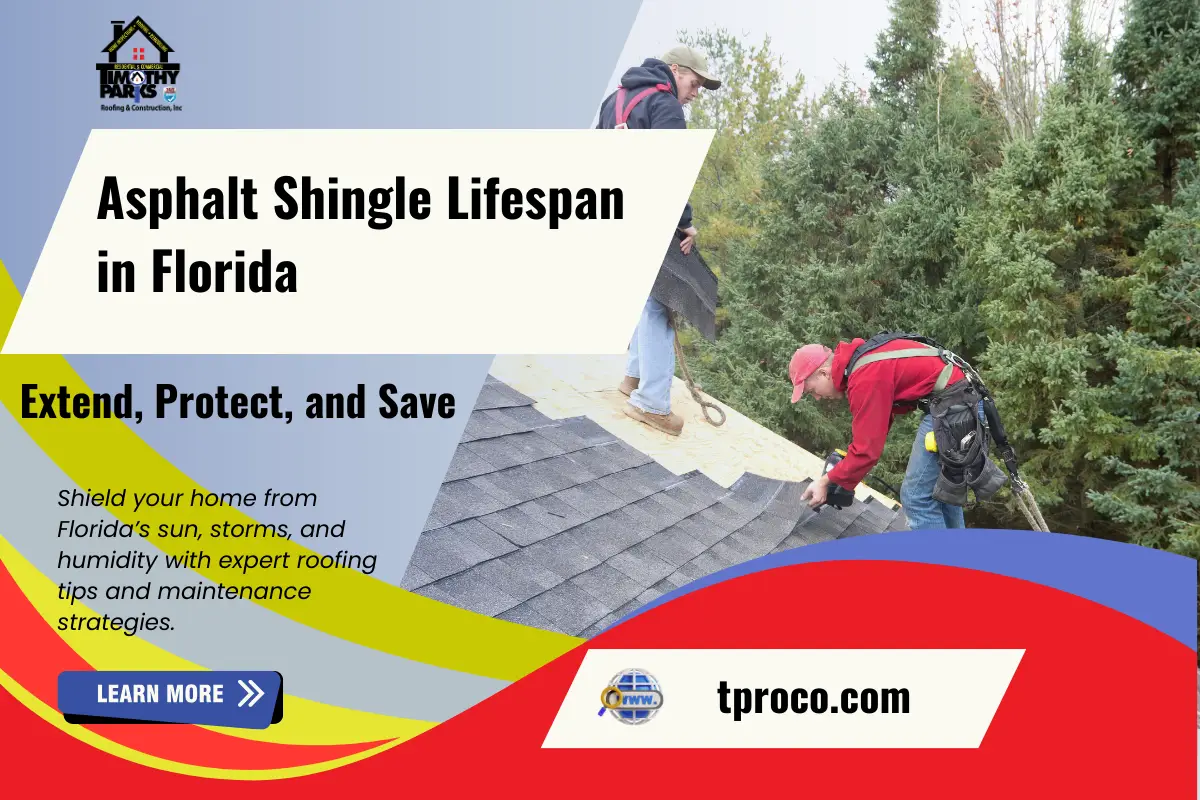
Asphalt shingles remain the most popular roofing material in the U.S.—and for good reason. They’re versatile, budget-friendly, and relatively straightforward to install. However, Florida’s intense sun, soaring humidity, and seasonal storms can wear down shingles at a faster rate. If you’re a homeowner striving to get the most out of your roof, you’ve come to the right place. In this blog, we’ll examine the factors that affect asphalt shingle lifespan in Florida, reveal how to spot signs of deterioration, and share practical maintenance strategies. Investing a bit of time and effort in your shingles can lead to substantial savings and longer-lasting protection for your home.
Why Asphalt Shingles Face Extra Stress in Florida
Florida homeowners often ask why their shingles wear out faster than expected. The answer lies in the state’s climate extremes:
1. UV Radiation
High UV Index: Prolonged sunlight degrades the shingle’s asphalt coating and can cause it to dry out, leading to cracks or curling edges.
Reflective Granules: These small stone chips protect the asphalt layer from direct sun. Once granules wear off, degradation accelerates.
2. High Humidity & Rainfall
Moisture Retention: Frequent rain and humidity can trap moisture in tiny cracks or under shingle layers, potentially causing mold or rot in the decking.
Thermal Expansion: Repeated heating and cooling cycles can cause shingles to expand and contract, weakening the adhesive and sealants.
3. Tropical Storms & Hurricanes
Wind Uplift: Asphalt shingles can become dislodged in high winds if not properly sealed or nailed.
Driving Rain: Heavy downpours can expose any weaknesses, leading to leaks and water damage.
Choosing the Right Shingle for Longevity
Not all asphalt shingles are created equal. Manufacturers produce different lines to suit varying budgets and climates:
1. 3-Tab Shingles
Budget-Friendly: Lowest cost but typically the shortest lifespan, around 15–20 years in standard conditions.
Wind Rating: Often rated around 60–70 mph, which may be inadequate for Florida’s hurricane-prone areas.
💡 Pro Tip: Best suited for lower-risk zones or homeowners on a tight budget.
2. Architectural (Dimensional) Shingles
Enhanced Durability: Thicker construction and multiple layers provide improved wind resistance, often up to 130 mph.
Longer Lifespan: Expect 25–30 years, though in Florida it might be closer to 20–25 years.
Aesthetic Appeal: Textured appearance can boost curb appeal.
3. Premium/Designer Shingles
Top Performance: Heavier composition resists extreme weather and can carry warranties up to 50 years.
Cost Factor: Higher investment upfront, but potentially fewer repairs and replacements long-term.
Style Options: May mimic slate or wood shakes for a high-end finish.
Maintenance Steps for Prolonging Shingle Life
While the lifespan of asphalt shingles in Florida may be shorter than in milder climates, proactive care can make a big difference:
1. Regular Inspections
Frequency: Twice a year—once before hurricane season and once after the highest storm risk has passed.
Visual Checks: Use binoculars to scan for curling edges, missing granules, and cracked shingles.
Close-Up Assessments: Carefully climb a ladder (if safe to do so) or hire a professional for a comprehensive look.
2. Clean Gutters & Downspouts
Clogged Gutters: Overflowing water can back up under shingles, weakening the roof edge.
Granule Buildup: Excessive granules in gutters are a sign your shingles are shedding their protective layer.
3. Trimming Nearby Trees
Branch Abrasion: Branches rubbing against shingles can strip granules and create leaks.
Debris Accumulation: Leaves or twigs on the roof hold moisture, accelerating algae growth.
4. Ventilation & Attic Insulation
Heat Dissipation: Proper vents allow hot, moist air to escape, reducing thermal stress on shingles.
Moisture Control: Adequate insulation prevents condensation that can damage the roof deck from below.
5. Timely Repairs
Quick Fixes: Repair or replace damaged shingles immediately to avoid water infiltration.
Professional Guidance: If you suspect underlying structural damage, consult a licensed roofer to assess the decking or underlayment.
Recognizing Signs of Shingle Deterioration
Catching problems early can prevent extensive (and costly) roof damage:
- Curling & Buckling
Curling: Edges turn upward, commonly due to moisture absorption or loss of volatile oils in the asphalt.
Buckling: Raised areas in the middle of the shingle indicate poor ventilation or issues with the roof deck.
- Missing Granules
Bald Spots: Exposed asphalt surfaces are more vulnerable to UV damage.
Gutter Debris: Check downspouts for a sand-like residue—this could be from worn granules.
- Cracking & Splitting
Thermal Shock: Rapid changes in temperature expand and contract the material. Over time, micro-cracks can develop into splits.
Impact Damage: Hail or flying debris can create visible cracks.
- Leaks & Stains
Interior Water Stains: Brownish circles on ceilings or walls often signal slow leaks.
Attic Inspection: Look for damp rafters, mold, or musty odors—common signs of water intrusion.
🏠 Conclusion
While Florida’s harsh climate can shorten the life of asphalt shingles, proactive maintenance and informed decision-making can keep your roof performing at its best. From selecting wind-resistant materials to staying vigilant with inspections and gutter cleanings, every step you take now can save you from expensive repairs or early replacements later. Remember that the extra UV and humidity challenges are manageable if you understand the unique stresses on your roof. Ultimately, investing in higher-quality shingles, proper ventilation, and regular upkeep will help ensure your asphalt shingle roof stands strong against Florida’s sun and storms—for as long as possible.
Frequently Asked Questions (FAQ)
1Can I install a second layer of shingles over the existing ones?While it’s sometimes allowed, it’s generally not ideal in Florida due to extra weight and heat buildup. Removing old shingles ensures thorough inspections and better adherence of the new layer.2How do I know if my shingles meet Florida’s wind code requirements?Check for labeling on bundles or ask the manufacturer. Many architectural shingles are rated for 110–130 mph winds. Always confirm with a licensed roofer familiar with local codes.3Do algae or dark streaks affect shingle performance?Algae and staining typically don’t compromise structural integrity right away, but they can retain moisture and speed up granule loss if left unchecked.4What’s the best time of year to replace my asphalt roof in Florida?Many homeowners schedule replacements in late winter or early spring to avoid peak hurricane season and summer heat. However, reputable contractors can work year-round if conditions are safe.5Are extended warranties worth it for asphalt shingles?Extended warranties can be valuable if they cover both materials and labor. Just read the fine print to understand any conditions—especially regarding annual inspections or specific installation methods.Ready to Invest in a Better Roof?
Share your experiences, questions, or success stories with Florida commercial roofs below! Tag us on social media using:
#tproco #tppro #tprci #urro #rrfl
#CommercialRoofing #FloridaBusiness #RoofMaintenance#FloridaConstruction #TampaBuildings #OrlandoContractors
Schedule a Roof InspectionAbout the Author

Timothy Parks
CEO
With over 45 years in construction and roofing—29 of them in Florida—Timothy Parks has guided countless homeowners toward durable and efficient roofing solutions. Holding licenses CBC059592 (Builder), CCC1327217 (Roofer), and HI4878 (Home Inspector), Timothy combines technical know-how with a passion for the local community, including promoting mountain bike races to bring enthusiasts together.