Florida’s subtropical climate is infamous for high humidity, frequent rain, and scorching sun. While we often focus on shingles or tiles to protect against storms, rot in the roof deck is a stealthier foe—one that can silently spread before you realize your roof’s structural integrity is compromised. Left unchecked, rotted decking or rafters threaten not just your wallet but your family’s safety. In this guide, we’ll delve into how rot starts (hint: minor leaks + trapped moisture), the early indicators of decay, and proven repair strategies suitable for Florida’s environment. By the end, you’ll be able to spot telltale signs, know when professional help is needed, and approach repairs or partial replacements that ensure your roof stands firm even when humidity and storms strike repeatedly.
What Is Roof Rot & Why It’s Prevalent in Florida
“Roof rot” generally refers to fungal decay in the wooden components of your roof—often the plywood/OSB decking, rafters, or trusses. Fungi thrive in moist conditions, and Florida’s balmy air provides ample humidity to feed them. Add in a minor leak or condensation buildup, and you have a perfect breeding ground under your shingles.
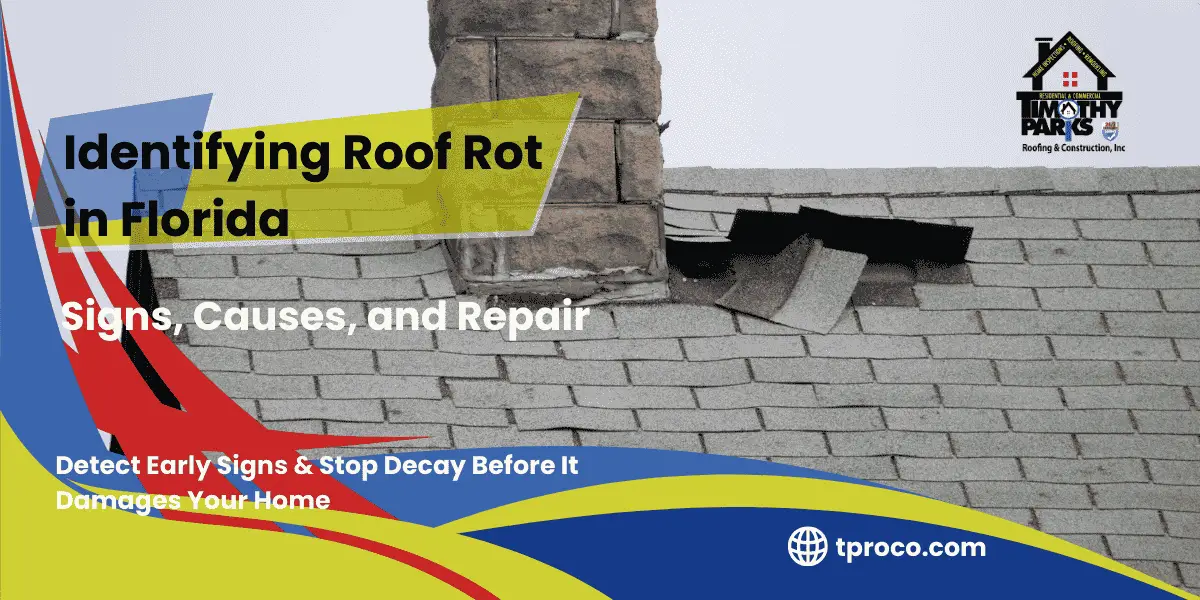
Unlike a sudden storm tear that’s immediately visible, rot works quietly. The wood fibers weaken over time, turning spongy, discolored, or crumbly. Once established, rot can quickly spread to adjacent boards, eventually compromising large roof sections. The real danger? A rotted deck can’t properly hold shingles, nails, or underlayment. In high-wind events, entire patches of roofing might peel off, revealing soaked insulation or even exposing your interior to direct rainfall.
Florida’s year-round warmth expedites fungal growth—moisture that might evaporate quickly in a drier climate can linger longer here. That’s why even small leaks or poorly ventilated attics can trigger hidden decay faster than homeowners anticipate.
Early Signs of Rot: Attic & Exterior Clues
Rot rarely announces itself until it’s advanced, but eagle-eyed homeowners can detect subtle hints before severe damage sets in:
Attic Inspection:
Look for dark or damp patches on the underside of decking, especially around seams. If you can press a screwdriver into the wood and it sinks easily, suspect rot. Musty odors also signal fungal activity.
Sagging Roof Plane:
From the exterior, if part of your roof seems to dip slightly, it might indicate weakened decking below. This can be faint at first but grows over time.
Shingle Deformation:
Rot below can cause subtle warping or bubbling of shingles. They might curve inward, not from heat but from a lack of solid substrate.
Persistent Leaks:
A small leak that reappears after multiple “fixes” might hide deeper rot, allowing water to route around your patch.
Regular checks are crucial in Florida’s environment, where moisture can remain trapped. A once-yearly attic walk—plus ground-level observations of your roof’s shape—can save thousands. The earlier you catch rot, the easier (and cheaper) the repair, since you can replace a limited section of decking instead of redoing half the roof.
Causes of Roof Rot in Humid Climates
Rot doesn’t appear from thin air—it stems from consistent exposure to moisture, combined with a food source (wood) and favorable temperatures. In Florida, these conditions abound:
- Hidden Leaks: Small cracks around flashing, shingle blow-offs, or vent pipe seals let water trickle inside. Over weeks or months, wood stays damp enough to sprout fungi.
- Poor Ventilation: If attic airflow is inadequate, heat and moisture accumulate, keeping decking perpetually damp. This fosters rot even without a direct leak.
- Algae or Debris on Roof: Overgrown gutters or collected leaves in valleys trap water. This can seep under shingles and wet the decking at the edges.
- Condensation: In cooler nights, humid indoor air might condense on cooler roof surfaces if your insulation or vapor barriers are lacking.
Addressing these root causes stops rot from recurring. Otherwise, even a replaced deck could rot again under the same moisture-laden conditions.
Temporary Measures vs. Permanent Repairs
If you discover rotted decking, it’s usually not enough to “patch it” with sealant. However, short-term measures may be necessary if severe weather is imminent:
- Emergency Tarping: Cover the roof externally if there’s an active leak. Tarp the suspected rotted zone, ensuring water can’t penetrate further. This buys time until calmer weather or a scheduled repair date.
- Interior Plastic Sheeting: If water drips into the attic or living space, staple plastic sheets overhead to channel water into buckets. This is purely a stopgap, not a fix.
Permanent Repairs:
- Deck Section Replacement: Cut out the rotted plywood or OSB. Overlap new boards onto rafters for stable support. Use nails or screws rated for exterior use, and ensure edges line up flush to avoid lumps under shingles.
- Re-Underlayment: Reapply underlayment over replaced decking, extending into healthy areas to overlap well. In Florida, a peel-and-stick membrane offers superior moisture blocking.
- Address Root Causes: Fix the leak source—whether it’s failing flashing or clogged gutters. Add or improve attic ventilation if condensation was the culprit.
Patching rotted decking with filler or spraying it with fungicide may slow the decay temporarily, but it won’t restore the wood’s lost structural capacity. For a safe, lasting solution, physically removing the compromised material is essential.
Best Materials for Florida Roof Decking
Once you’ve removed the rotted sections, choosing the right replacement materials helps your roof withstand Florida’s climate longer:
- CDX Plywood: A common standard, typically 1/2" or 5/8" thick. Resists moisture decently if properly sealed, but extended exposure to humidity can still warp or delaminate.
- OSB (Oriented Strand Board): Widely used for cost-effectiveness. OSB can be strong when dry, but prolonged moisture can cause swelling at edges. Look for OSB with enhanced moisture-resistant resins if you go this route.
- Pressure-Treated Plywood: Infused with chemicals that slow rot and fungal growth. Usually heavier and pricier, but beneficial in consistently damp or coastal environments. Ensure it’s code-approved for your area and suitable for roof decking (some pressure treatments may corrode standard metal fasteners if not chosen properly).
Whichever you pick, protect it with quality underlayment. Florida’s building codes often require a synthetic or peel-and-stick underlayment that’s more robust than felt. A well-sealed deck-laminate system greatly reduces the chance that minor leaks or condensation will lead to renewed rot down the road.
Step-by-Step Deck Replacement
Replacing rotted decking can be done DIY if you’re comfortable on roofs and have the right tools. Here’s a basic outline:
1. Mark the Rotted Area:
From the attic or roof, identify where the wood is compromised. Chalk lines to outline the cut, ensuring they fall over the centers of rafters or trusses for proper support.
2. Remove Shingles/Underlayment:
Peel back roofing materials about a foot beyond the rotted zone. This may involve carefully prying nails and adhesive strips, so you don’t tear healthy shingles.
3. Cut Out Rotted Deck:
Use a circular saw set to the plywood thickness. Remove the piece and discard. Inspect rafters for mold or rot—if a rafter is significantly decayed, you might need a sister board or full rafter replacement.
4. Install New Plywood/OSB:
Cut your replacement board to match the gap. Place it so edges land on rafters, then nail or screw every 6–8" along supports. Leave a slight 1/8" gap between boards for expansion if recommended by local codes.
5. Re-Underlay & Re-Shingle:
Overlap the new underlayment well onto existing layers. Nail shingles back in place, applying roofing cement under tab corners if needed to seal them from wind-driven rain.
Done carefully, this partial replacement will seamlessly blend with the rest of the roof, restoring structural soundness without needing an entire re-roof.
Preventing Future Rot: Maintenance & Ventilation
Fixing rot once isn’t enough if the underlying moisture problem persists. Florida’s climate demands ongoing vigilance:
- Regular Roof Inspections: Twice a year (and after big storms) climb safely or hire a pro. Look for curled shingles, cracked flashing, or debris buildup that fosters water retention.
- Attic Ventilation: Ensure soffit vents, ridge vents, or gable vents allow hot, moist air to escape. Proper airflow curbs condensation from building up under the deck.
- Gutter & Downspout Care: Clean them frequently so water doesn’t overflow onto the fascia or edges of the roof. Blocked gutters are a common culprit for perimeter deck rot.
- Fix Small Leaks Quickly: Don’t postpone minor repairs; Florida’s heat can turn a dribble into serious decay within weeks or months.
By tackling these protective measures, you minimize the chance of another hidden rot outbreak. A well-ventilated, well-maintained roof stands a far better chance of surviving Florida’s humidity year after year.
Conclusion
🌱 Roof rot is a silent destroyer, thriving in Florida’s warm, damp conditions and gradually undermining your deck until a small leak turns into a structural crisis. Spotting early signs—like dark attic patches or slightly sagging shingles—and removing compromised wood is the surest way to protect your home. Coupled with improved ventilation, robust underlayment, and regular inspections, a deck replacement halts further decay and ensures your roof won’t buckle during heavy storms. Don’t let hidden rot erode your peace of mind; address it promptly and thoroughly, so your roof can withstand Florida’s humid climate for many seasons to come.
Frequently Asked Questions (FAQ)
1How can I confirm mold presence in the attic?Beyond musty smells, check wood surfaces for fuzzy growth. A professional mold test can confirm spore counts.2Do I have to replace an entire plywood sheet if only one corner is rotted?You can cut and patch smaller sections, ensuring you anchor them on rafters. Replacing the full sheet is often simpler if over half is compromised.3Will painting the deck underside prevent rot?Not really. Moisture typically enters from the top. Proper underlayment, ventilation, and leak prevention are more effective.4Is OSB or plywood better for Florida humidity?Both can work if installed with care. Many pros prefer higher-grade plywood or moisture-resistant OSB formulations in very damp areas.5Should I call a pro if I see rotted rafters?Yes, structural members need safe re-framing or sistering. This goes beyond basic decking replacement.🌱 Spot Roof Rot Before It’s Too Late!
Roof rot can silently weaken your roof. Learn how to identify signs early, prevent decay, and repair damaged decking to keep your Florida home safe and sound.
#tproco #tppro #tprci #urro #rrfl
#RoofRot #DeckRepair #MoistureControl #FloridaHomes #SunshineState #OrlandoRepair
Schedule a Roof InspectionAbout the Author

Timothy Parks
CEO
In 45+ years of roofing and construction, Timothy Parks has spent 29 tackling Florida’s moisture-laden challenges. Licensed under CBC059592 (Builder), CCC1327217 (Roofer), and HI4878 (Inspector), Timothy also demonstrated community leadership by successfully promoting “Sparky’s D.IR.T. (Delve Into Rough Terrain)” MTB race in Rock Island, IL. Advocating proactive roof maintenance, Timothy emphasizes the importance of catching rot early and ensuring comprehensive repairs, so hidden decay doesn’t derail your roof’s structural integrity in Florida’s humid climate.