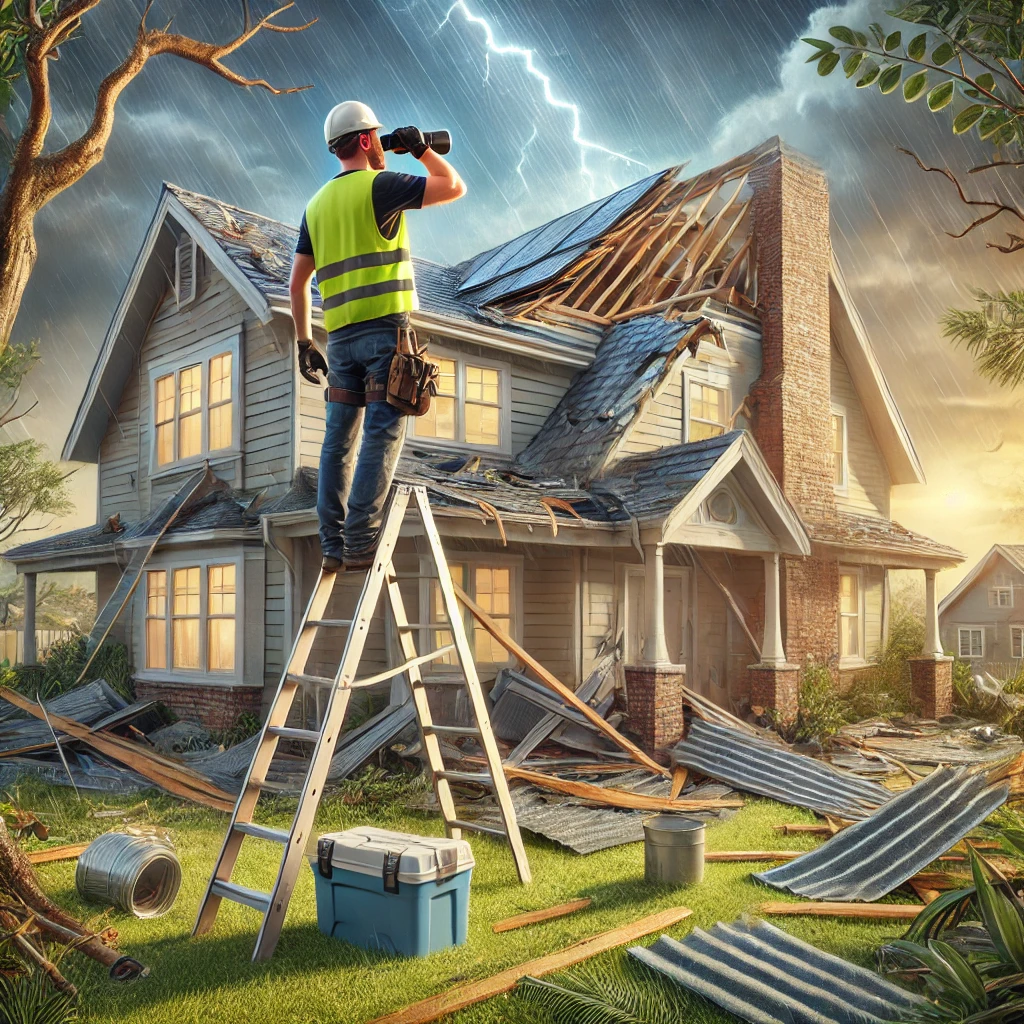
Hurricanes can unleash devastating forces of nature, leaving homes vulnerable to significant roof damage. For homeowners, understanding the signs of storm damage and acting swiftly is crucial to protect your property and ensure safety. In this guide, we’ll walk you through everything you need to know about identifying roof damage from a hurricane, how to address it, and when to seek professional help for storm damage roof repairs.
Why Roof Damage Matters After a Hurricane
Your roof is your home’s first line of defense against harsh weather. When compromised by storm damage, it can lead to:
- Water leaks and structural weakening.
- Mold and mildew growth inside your home.
- Increased repair costs if ignored.
Hurricane-induced damage is often invisible to the untrained eye, making roof storm damage inspection a critical step after the storm has passed.
What Is Considered Storm Damage to a Roof?
Storm damage to a roof refers to the destruction caused by extreme weather elements such as high winds, heavy rain, hail, or flying debris. Here are the most common types of hurricane-related storm damage:
1. Wind Damage
Hurricanes generate powerful winds capable of:
- Lifting and tearing shingles from your roof.
- Breaking the seal on shingles, exposing the underlayment.
- Dislodging gutters, flashing, or vents.
2. Water Damage
Persistent heavy rain can lead to:
- Water intrusion through damaged or missing shingles.
- Pooling water on flat roof areas, causing leaks.
- Saturated roof decking, which weakens the structure over time.
3. Impact Damage
Flying debris and fallen branches can:
- Crack or puncture roofing materials.
- Damage gutters and vents.
4. Hidden Damage
Not all damage is immediately visible. Over time, issues like:
- Compromised structural integrity.
- Mold growth from unnoticed water leaks.
Signs of Storm Damage to Roof
After a hurricane, it’s essential to inspect your roof for visible and hidden damage. Here’s what to look for:
Exterior Signs
- Missing or Torn Shingles: High winds may rip shingles off or leave them hanging loose.
- Cracked or Dented Shingles: Impact from debris or hail often causes visible surface damage.
- Granule Loss: Check gutters and downspouts for shingle granules, indicating wear or hail damage.
- Damaged Flashing or Vents: Look for bent, torn, or missing flashing around chimneys or vents.
- Sagging Rooflines: A warped or uneven roofline could indicate severe structural damage.
Interior Signs
- Water Stains: Brown spots on ceilings or walls often signal a leak.
- Mold or Mildew Growth: Excessive moisture from leaks can promote fungal growth.
- Dripping Water: Active leaks during rainstorms indicate immediate damage.
How to Identify Roof Damage After a Hurricane
Conducting a roof inspection after a hurricane involves assessing both visible and hidden damage. Follow these steps for a thorough inspection:
1. Start from the Ground
- Use binoculars to examine the roof safely from the ground.
- Look for missing shingles, sagging areas, or debris on the roof.
2. Inspect the Attic
- Check for light penetration through the roof deck.
- Look for water stains or damp insulation.
3. Use a Wind Damage Roof Inspection Guide
A professional wind damage roof inspection guide can help pinpoint less obvious issues, such as loosened shingles or damaged seals.
4. Call a Professional
Some storm damage, such as underlying structural issues, requires an expert eye. A storm damage roofing company can provide a comprehensive assessment and recommend necessary repairs.
What to Do If You Spot Storm Damage on Roof
If you identify roof damage from a storm, take these immediate steps to minimize further harm:
1. Document the Damage
- Take clear photos of all visible damage.
- Make notes about the type and extent of the damage for insurance purposes.
2. Protect Your Home
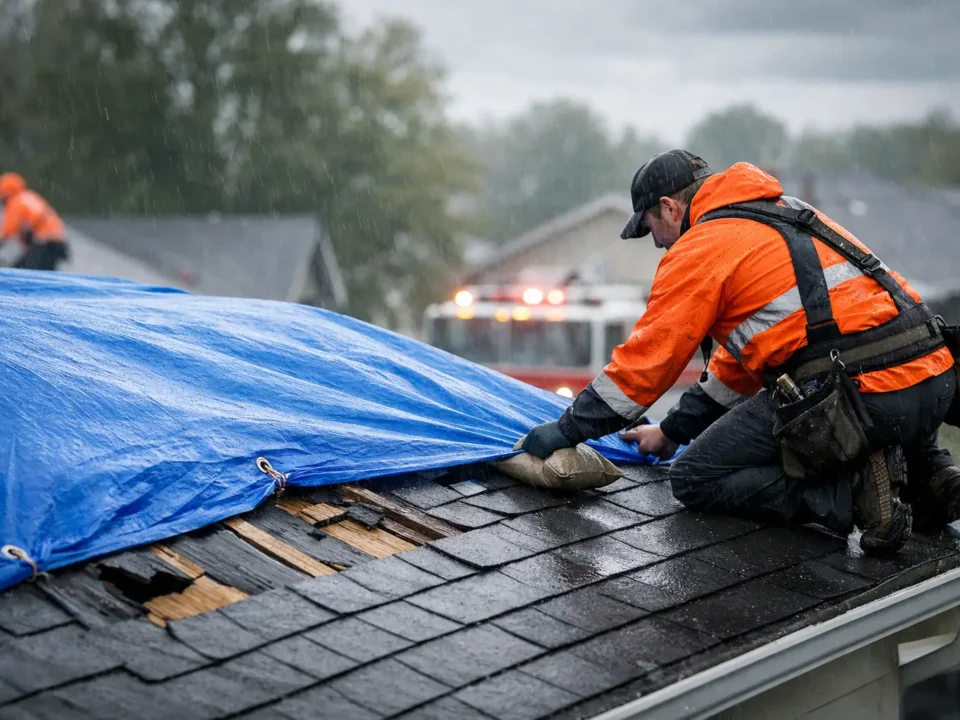
- Cover leaks with tarps or plastic sheeting to prevent water intrusion.
- Clear debris safely from gutters and roof surfaces to restore drainage.
3. Contact Your Insurance Provider
- File a claim with your homeowner’s insurance company.
- Provide documentation of the damage, including photos and repair estimates.
4. Schedule Roof Storm Damage Repair
- Hire a trusted storm damage roofing company to handle repairs.
- Ensure they are licensed, insured, and experienced in hurricane damage.
How Storm Damage Roof Repairs Work
The repair process often includes:
- Inspection and Assessment: Professional roofers identify the full extent of the damage.
- Temporary Fixes: Tarps or temporary patches may be applied to prevent further harm.
- Full Repairs or Replacement: Depending on the severity, your roof may need localized repairs or a complete replacement.
Preventative Measures to Minimize Future Roof Damage
While hurricanes are unpredictable, you can take steps to fortify your roof against future storms:
1. Schedule Regular Inspections
Routine inspections before and after hurricane season can catch minor issues early.
2. Upgrade to Storm-Resistant Materials
Invest in wind-resistant shingles, reinforced flashing, and impact-resistant roofing materials.
3. Maintain Gutters and Downspouts
Keep gutters clear to prevent water pooling on the roof.
4. Trim Surrounding Trees
Remove overhanging branches that could fall onto your roof during a hurricane.
When to Call a Storm Damage Roofing Company
If the damage is extensive or involves structural issues, don’t delay in contacting a professional. Storm damage roof inspection experts can:
- Identify hidden damage.
- Provide accurate repair estimates.
- Work with your insurance company for claims.
Why Choose Professionals for Storm Damage Roof Repair
Professional roofing companies:
- Have specialized tools and safety equipment.
- Are experienced in handling insurance claims.
- Provide warranties for their work, ensuring peace of mind.
Conclusion
Spotting roof damage after a hurricane is critical to protecting your home from further issues. By following this guide and acting swiftly, you can prevent small problems from becoming major repairs. For expert assistance with storm damage roof repair, reach out to a trusted storm damage roofing company in your area.
FAQ's
1How Can I Assess Roof Damage After a Storm?Assessing roof damage after a storm involves a detailed inspection of both the exterior and interior of your home. Start by examining the roof from the ground using binoculars, looking for signs such as missing or cracked shingles, sagging areas, or debris scattered across the roof. Check your gutters and downspouts for shingle granules or any blockages caused by storm debris. Inside your home, inspect the attic and ceilings for water stains, damp insulation, or light shining through the roof deck. For a more structured approach, using a roof storm damage checklist can help you identify potential problems, such as damaged flashing or dents caused by hail. If you’re unsure about the extent of the damage, it’s always a good idea to consult a professional roofer who can safely and thoroughly evaluate your roof.2Does Insurance Cover Roof Damage from Hurricanes?In most cases, homeowner’s insurance policies cover roof damage caused by hurricanes, but the level of coverage depends on your specific policy. Standard policies generally include coverage for storm-related damages, but hurricane-specific coverage may require a separate endorsement or come with higher deductibles. To ensure your claim is successful, you need to provide detailed documentation of the damage, including photos, professional inspection reports, and repair estimates. Keep in mind that insurance companies often require proof that the damage occurred during the hurricane. Consulting a roofing contractor experienced in storm damage claims can help streamline the process and increase the likelihood of getting the compensation you need.3How Can I Tell if My Roof Is Damaged?Determining whether your roof is damaged after a storm involves looking for visible and subtle signs. On the exterior, look for missing, torn, or lifted shingles, as well as dents or granule loss caused by hail. A sagging or uneven roofline can indicate structural issues, while debris lodged on the roof can cause hidden damage. Inside your home, watch for water stains on ceilings and walls, mold or mildew growth, or active leaks during rainfall. Overflowing gutters or granules in your downspouts are also indicators of wear and tear on your shingles. Since some damage may not be visible, especially to the untrained eye, hiring a professional for a thorough inspection can ensure all vulnerabilities are identified.4What Does Storm Damage on a Roof Look Like?Storm damage on a roof can manifest differently depending on the type of storm. Hurricanes often cause missing shingles, damaged flashing, or structural deformations. Hailstorms typically leave pockmarks, dents, or bruising on shingles, which can compromise their integrity. High winds can lift or curl shingles, detach gutters, and expose the underlayment, leaving your roof vulnerable to leaks. Heavy rain may result in water pooling on flat roof sections or leaks that seep into your home. Each type of storm damage weakens your roof’s ability to protect your home, and addressing it promptly is essential to prevent further deterioration.5What Steps Should I Take for Storm Damage Roof Repairs?If you suspect storm damage to your roof, taking immediate action is crucial to prevent further harm. Start by documenting the damage with photos and notes, as this will be useful for insurance claims. Contact your insurance provider to file a claim and provide all necessary evidence, including repair estimates from a trusted roofing contractor. Temporary fixes, such as covering leaks with tarps, can help prevent water intrusion until professional repairs are made. Hiring a licensed roofing contractor experienced in storm damage repairs ensures the job is done safely and effectively, protecting your home for the future.Request An Inspection TODAY
Latest News
When You Need Emergency Roof Tarp Service
April 3, 20260
Best Roofing Materials for Florida Homes (2025 Guide)
July 3, 20251Best Roofing Materials: A Comprehensive Guide on Costs, Pros, and Cons
July 3, 20250
Green Roofing in Florida: Eco-Friendly Options & Their Surprising Benefits 🌱
June 8, 20251
Florida Roof Wind Mitigation Updates: New Rules & Insurance Benefits 💨
June 8, 20251