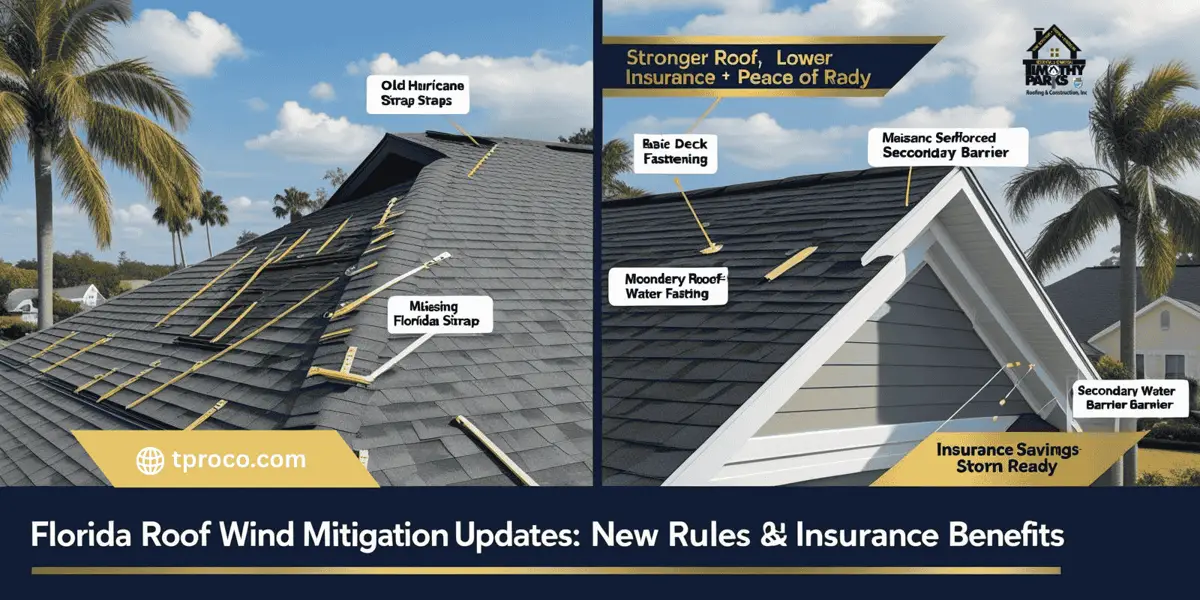
In Florida, “wind mitigation” refers to construction features that reduce hurricane or storm damage. Over the years, the state has tightened codes around roof attachment, secondary water barriers, and roof-to-wall connections. If your home lacks these features—or if you’re uncertain about changes in the latest code cycle—you could face higher insurance premiums or greater storm risk. This blog breaks down new wind mitigation requirements, highlights inspection steps that confirm compliance, and reveals how these improvements often lower your homeowner’s insurance rates. By the end, you’ll see why investing in wind mitigation upgrades not only strengthens your roof’s storm resilience but can also deliver real cost savings in Florida’s insurance market.
1. Florida’s Evolving Wind Mitigation Code
Florida’s building codes have undergone multiple overhauls post-Hurricane Andrew (1992) and subsequent storms. As roofing technology advances and storm data accumulates, new requirements emerge. Recent highlights:
- Enhanced Deck Nailing: Many Florida counties now require ring-shank nails at closer spacings (4–6 inches) for re-roofs. This prevents deck uplift under intense winds.
- Secondary Water Barriers: A peel-and-stick membrane or taped underlayment seams are often mandated if you replace an entire roof covering. The goal: keep water out if shingles or tiles blow off.
- Upgraded Hurricane Straps/Clips: In older homes, partial or full roof replacements can trigger code that demands improved roof-to-wall connectors (metal ties or wraps).
- Ridge Vent Fastening & Foam Seal: Florida’s code also addresses how ridge vents must be anchored and sealed to block wind-driven rain infiltration.
Each code cycle refines the details. Homeowners re-roofing older structures sometimes discover new mandates—like needing to re-nail the deck or add a self-adhered membrane. While these changes raise project costs, they drastically cut storm damage potential. And if you follow code, you might earn significant insurance discounts once your roof is fully wind mitigated.
2. Key Wind Mitigation Features
A Florida roof that qualifies for wind mitigation credits typically includes these core features:
- Roof-to-Wall Attachments: Double-wrap straps or clips anchoring each rafter/truss to the top plate. The stronger the strap (and the more nails used), the higher the discount potential.
- Roof Deck Nailing: Using ring-shank nails at required spacing (often 6 inches in non-HVHZ zones, 4 inches in HVHZ). Replacing staples or standard nails significantly boosts uplift resistance.
- Secondary Water Barrier (SWB): Peel-and-stick membranes or taped plywood seams that act as a backup if the primary covering fails. Some underlayments also have self-sealing qualities around nails.
- Hip Roof Geometry (If Applicable): Homes with a predominantly hip roof structure—sloping on all sides—often earn higher credits because hip roofs better deflect wind.
- Shuttered or Impact-Resistant Openings: Although not strictly “roof,” wind-driven rain can breach windows and pressurize the attic. If your entire building envelope is protected, your roof is less likely to blow off from internal pressure.
Some insurers require an official wind mitigation inspection (often known as a Uniform Mitigation Verification Inspection) by a licensed Florida inspector. The inspector documents each wind mitigation feature with photos, verifying compliance. Higher-tier attachments or secondary water barriers yield bigger premium reductions, offsetting re-roof expenses. If you’re re-roofing, installing these features at once is simpler and ensures you meet the latest Florida code for robust storm protection.
3. Insurance Discounts & Documentation
Many Florida insurers offer premium credits or discounts if your roof meets or exceeds wind mitigation standards. Here’s how to leverage them:
Uniform Mitigation Form:
After installing code-compliant features (hurricane straps, secondary water barriers, etc.), schedule a wind mitigation inspection. The inspector completes this standardized form with checkboxes for each improvement.
Photo Evidence:
Insurers require visual proof. Ensure the inspector captures clear images of straps, deck nailing patterns, underlayment, and roof geometry. Keep digital copies handy for policy renewals.
Policy Review:
Submit the form to your insurance agent. Many carriers recalculate premiums once they confirm your new or upgraded roof. Discounts can range from modest to significant, depending on how many boxes you check (e.g., hip roof, SWB, advanced straps).
Renewal Updates:
If you perform further wind mitigation improvements later (like adding impact windows or shutters), re-inspections can boost your credits. Florida insurers sometimes require an updated form every 5 years or after major upgrades.
Some owners recoup thousands over the life of their policy by aligning the roof with code-based wind mitigation enhancements. These features don’t just yield financial perks—they also slash the likelihood of catastrophic roof loss in Florida’s next hurricane. The key is comprehensive documentation to prove your roof’s newfound storm resilience.
4. Upgrading an Older Roof for Wind Mitigation
If you own an older Florida home, you can still retrofit certain wind mitigation features without a full roof replacement:
- Roof-to-Wall Strap Retrofit: Installers might remove small soffit or interior drywall sections near top plates to add or improve metal ties. While not trivial, the cost is often less than re-roofing, and insurance savings can be significant.
- Deck Re-Nailing (When Partially Exposed): If you’re repairing a portion of the roof or opening it for insulation, you might re-nail the deck at tighter intervals in those sections. Gains may be partial but still beneficial.
- Secondary Water Barrier Sealing: Taping plywood seams from the attic side is one approach. Alternatively, if you replace any underlayment, use self-adhering peel-and-stick around the entire roof deck.
- Additional Strapping at Gable Ends: Gable roofs are more vulnerable to wind pressure. Reinforcing that connection with braces or extra straps helps.
Retrofits can be complicated if your attic’s geometry or existing structural layout is tough to access. But each improvement can edge you closer to top-tier wind mitigation status. Evaluate your costs against potential insurance savings, factoring in Florida’s storm risk. Even if full compliance is out of reach, partial upgrades reduce both vulnerability and out-of-pocket insurance costs in the long run.
5. Common Pitfalls & Tips for Successful Wind Mitigation
Avoid these pitfalls when pursuing wind mitigation in Florida:
- Improper Documentation: Some owners do the upgrades but skip the official inspection or fail to submit the form. Without proof, insurers won’t grant discounts.
- Overlooked Gable Bracing: If your home features a large gable end, ignoring bracing or straps leaves a big vulnerability. Hurricanes can cause gable end collapse, letting water pour in.
- DIY or Unlicensed Work: Florida requires licensed professionals for structural changes. Insurers distrust unverified retrofits, especially for strap installations or deck re-nailing.
- Forgetting Underlayment Taping: If you re-roof, taping seams or using a peel-and-stick membrane is mandatory in many local codes. Missing this step often costs you a significant potential discount.
- Misreading Policy Conditions: Some carriers differentiate between partial compliance vs. full compliance. Read your policy to see how each feature influences your premium.
To succeed, thoroughly plan each wind mitigation step, engage licensed contractors, and follow up with a recognized inspector who completes the form. Keep all receipts, photos, and the final inspection form in a safe place. If any insurer tries undervaluing your improved status, referencing official documents typically resolves disputes. With the right approach, your roof stays storm-ready, and your wallet reaps the benefits.
Conclusion
💨 Florida’s wind mitigation updates continue evolving, pushing roofs to higher standards for hurricane endurance. By incorporating features like hurricane straps, deck re-nailing, and secondary water barriers, homeowners drastically reduce storm damage risks and often secure sizable insurance discounts. While these upgrades may seem costly initially, the long-term payoff—protection, peace of mind, and lower premiums—makes them worthwhile in a state prone to intense winds. Armed with the right knowledge, official inspections, and thorough documentation, you can transform an older roof into a code-compliant fortress, reaping both financial and safety rewards as Florida’s weather challenges intensify.
Frequently Asked Questions (FAQ)
1Does wind mitigation only apply to new Florida homes?No. While new builds must meet current codes, older homes can retrofit straps, deck nailing, or SWBs to gain partial compliance and insurance breaks.2Are wind mitigation inspections required annually?Typically valid for 5 years unless you’ve done major improvements. Check with your insurer for re-inspection frequency.3Can a partial roof repair trigger the 25% rule?Yes. If over 25% is replaced within 12 months, the entire system must comply with new code, including deck nailing or secondary water barrier.4Are hurricane shutters part of wind mitigation credits?Yes, opening protection helps. A fully protected envelope reduces internal pressure that can lift the roof. Combine roof features with shutters for max discounts.5How do I find a wind mitigation inspector?Licensed Florida home inspectors, general contractors, or roofing contractors can conduct them. Ensure they use the official form recognized by insurance carriers.💨 Florida Roof Not Up to Latest Wind Mitigation Code? Save on Insurance & Stay Safe!
New Florida wind mitigation standards can lower your insurance costs and better protect your roof from storms. Learn how modern upgrades—straps, deck nailing, barriers—boost both safety and savings.
#tproco #tppro #tprci #urro #rrfl
#WindMitigation #FloridaRoof #HurricaneReady #TampaInsurance #OrlandoWindCodes #SunshineState
About the Author

Timothy Parks
CEO
With 45+ years of roofing insight—29 in Florida’s storm belt—Timothy Parks (Licensed CBC059592, CCC1327217, HI4878) guides homeowners through wind mitigation enhancements that unlock insurance discounts and protect against hurricane threats. Drawing on the organizational skills once showcased at the “Sparky’s D.IR.T. (Delve Into Rough Terrain)” MTB race, Timothy systematically addresses each code requirement—straps, underlayments, roof geometry—to ensure genuine storm resilience. Whether performing a new roof or retrofitting an older structure, he emphasizes thorough documentation and code compliance so clients can enjoy peace of mind, greater home value, and real savings under Florida’s demanding climate.