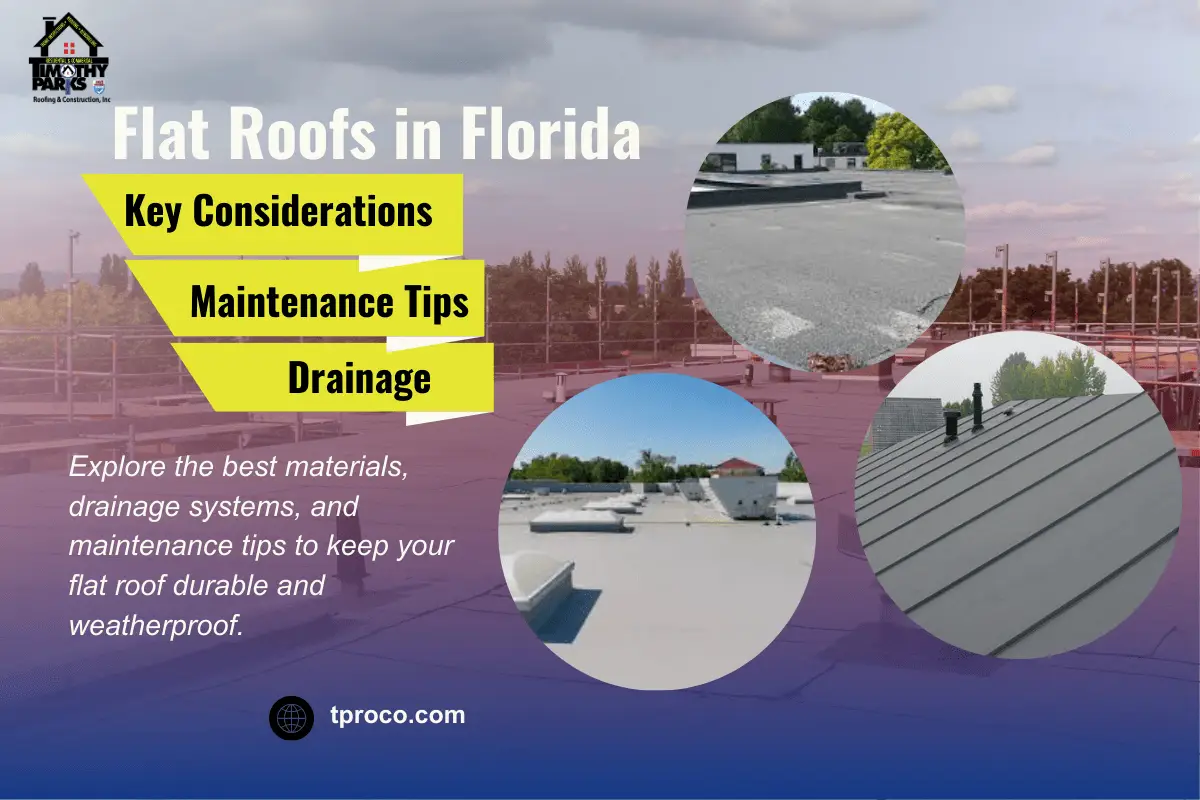
Flat roofs have grown in popularity across Florida for both commercial and residential properties. Their sleek, modern appearance fits well with contemporary architecture, and they can maximize usable space—think rooftop terraces or HVAC unit placements. However, flat roofs face unique challenges in the Sunshine State: heavy rainfalls, hurricanes, and intense heat can create significant wear-and-tear if not properly addressed. In this blog, we’ll guide you through the most important considerations for a durable flat roof in Florida, covering materials, drainage solutions, and maintenance best practices. Whether you’re building new or renovating an existing structure, this comprehensive overview will help ensure your flat roof remains leak-free and structurally sound for years to come.
The Appeal of Flat Roofs
Flat roofs are characterized by their minimal slope (typically under 2/12). Though not entirely level, they appear nearly horizontal:
- Modern Aesthetics
Sleek Profile: Flat roofs complement contemporary designs, offering clean lines and geometric shapes.
Rooftop Spaces: Ideal for rooftop gardens, solar panels, or lounge areas—especially valuable in urban settings.
- Construction Efficiency
Less Material: Flat roofs often require fewer materials than steep-slope systems.
Easier Access: Maintenance crews can walk on flat surfaces more safely, simplifying repairs and inspections.
- Cost Considerations
Labor & Installation: Often less labor-intensive than complex pitched roofs, though advanced waterproofing layers can add to costs.
Energy Savings: Many flat roofing systems incorporate reflective membranes that can lower cooling expenses in Florida’s hot climate.
Common Flat Roof Materials
TPO (Thermoplastic Polyolefin)
Reflective Surface: Often bright white, reflecting UV rays to reduce heat penetration.
Cost-Effective: Tends to be more affordable than some other single-ply membranes.
Welded Seams: Creates a watertight bond that resists leaks, crucial for Florida’s downpours.
PVC (Polyvinyl Chloride)
Excellent Chemical Resistance: Ideal for commercial buildings where grease or chemicals may be present on the roof.
Durability: Can last 20–30 years with proper care.
Higher Price Point: Typically more expensive than TPO.
EPDM (Ethylene Propylene Diene Monomer)
Rubber-Like Flexibility: Handles temperature fluctuations well.
Dark Surface: Traditional EPDM is black, which can absorb heat unless you apply a reflective coating.
Low Maintenance: Seams are typically adhered or taped, though care is needed to ensure longevity in humid climates.
Modified Bitumen
Multi-Layer System: Combines asphalt with reinforcing fabrics for added strength.
Torch-Down or Peel-and-Stick: Different installation methods can suit various budgets and building needs.
Impact Resistance: Good option for areas prone to hail or debris impact during storms.
Drainage Solutions: The Heart of a Flat Roof
One of the biggest misconceptions about flat roofs is that water simply “sits” on top. In reality, a minimal slope or carefully placed drains help remove water efficiently:
- Internal Drains
Hidden Pipes: Drain water through internal piping to ground-level storm drains.
Aesthetic Advantage: No visible downspouts or gutters on the building exterior.
Maintenance Note: Regularly clear debris from drain inlets to prevent clogs.
- Scuppers
Openings in Parapet Walls: Allow water to flow off the roof edge into a downspout.
Cost-Effective: Simpler installation and fewer internal pipes.
Potential Splashing: Water may pour directly onto sidewalks or landscaping if not paired with a proper downspout or splash block.
- Gutters & Downspouts
Edge-Mounted: Water is directed to the edges of the roof, then funneled into gutters.
Compatibility: Works well on low-slope designs that incorporate slight pitch toward the edges.
Pro Tip: Oversized gutters can handle Florida’s heavy rainfall more effectively.
- Slight Slope (1/4" per foot)
Industry Standard: Even “flat” roofs typically have at least a 1/4" slope per foot for positive water flow.
Pooling Prevention: Eliminating standing water is crucial to avoid premature membrane deterioration.
Maintenance Practices to Prevent Leaks
- Regular Inspections
Frequency: At least twice a year, plus after severe storms.
Focus Areas: Check seams, flashing, drains, and any roof penetrations (like HVAC units) for signs of wear or water infiltration.
Documentation: Keep notes and photos to track changes over time.
- Clearing Debris
Leaves & Dirt: Accumulate faster on flat surfaces, blocking drains.
Mold & Algae: Standing water can lead to biological growth, which accelerates membrane breakdown.
🔧 Maintenance Tip: Use a leaf blower or a soft-bristle broom to remove debris without damaging the roof membrane.
- Sealing Penetrations
HVAC & Vent Pipes: Seal around penetrations with appropriate flashing or boots to prevent leaks.
Chemical Exposure: If rooftop equipment expels chemicals or grease, ensure the membrane is resistant or protected by special mats.
- Address Ponding Water Quickly
Red Flags: Water that remains for over 48 hours after rainfall.
Long-Term Damage: Stagnant water can weaken membranes, invite algae, and add undue weight to the roof structure.
Professional Grade Fixes: In severe cases, installing tapered insulation or adding more drains might be necessary.
Conclusion
🏠 Flat roofs in Florida offer a sleek design and valuable functional space, but they also demand careful attention to waterproofing, drainage, and routine upkeep. Selecting the right membrane—be it TPO, PVC, EPDM, or modified bitumen—plays a vital role in longevity and overall performance. Equally important is ensuring adequate slope and well-maintained drains or scuppers to manage Florida’s intense rainfall. By investing in high-quality materials, thorough installation, and consistent inspections, you can enjoy all the benefits of a flat roof without the headaches of frequent leaks and costly repairs. Whether you’re a homeowner, property manager, or business owner, these foundational steps will help your flat roof withstand the Sunshine State’s demanding climate for many years to come.
Frequently Asked Questions (FAQ)
1How long do flat roofs last in Florida’s climate?With proper materials and maintenance, a flat roof can last 15–25 years or more. Longevity depends on factors like membrane type, installation quality, and routine care.2Do I need a permit for installing or replacing a flat roof?In most cases, yes. Florida’s building codes require permits for significant roofing work to ensure compliance with wind and waterproofing standards.3Can I convert a pitched roof to a flat roof?It’s possible, but structural modifications are often necessary. Consult a licensed contractor or structural engineer to assess feasibility and code compliance.4How can I prevent ponding water on my flat roof?Ensure a proper slope or install adequate drainage systems like scuppers or internal drains. Regularly remove debris that could clog drains or restrict water flow.5Are flat roofs suitable for hurricane-prone areas?They can be, provided they’re constructed with wind-rated membranes, secure flashing, and robust drainage solutions. Always follow local building codes for added reinforcement.Ready for a Reliable Flat Roof?
Have questions about choosing the right membrane or ensuring proper drainage? Share your experiences or concerns in the comments below! Tag your posts with:
#tproco #tppro #tprci #urro #rrfl
#FlatRoof #RoofDrainage #FloridaHomes#SunshineState #TampaConstruction #OrlandoBuilders
Schedule a Roof InspectionAbout the Author

Timothy Parks
CEO
With 45+ years of roofing and construction experience—29 of them in Florida—Timothy Parks has seen every kind of flat roof challenge the Sunshine State can conjure. Licensed as CBC059592 (Builder), CCC1327217 (Roofer), and HI4878 (Home Inspector), Timothy brings a wealth of expertise to every project. Beyond roofing, he promotes mountain bike races, combining his passion for community and the great outdoors.