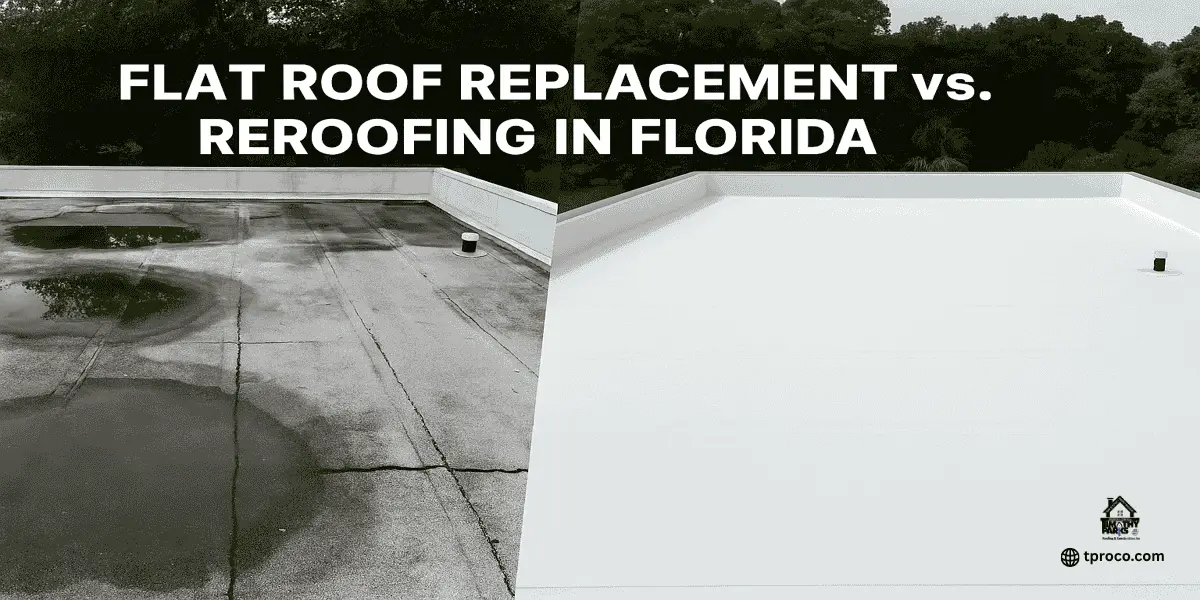
Flat roofs (or low-slope roofs) are common on Florida’s commercial buildings and many modern homes. But dealing with ponding water, cracking membranes, or persistent leaks can force the tough question: Is it time for a full tear-off or can you get by with a less invasive retrofit? With Florida’s climate punishing roofing systems through heat, rain, and hurricane gusts, making the right call can save (or waste) thousands. This blog compares full replacement (complete membrane removal and new insulation) versus partial reroofing or overlay systems. We’ll delve into code triggers, cost considerations, and material choices to help you pick a route that defends your building without busting your budget—ensuring your flat roof stands strong for years under Florida’s intense conditions.
1. Assessing Flat Roof Condition & Lifespan
The first step is an honest appraisal of your roof’s health:
Membrane Age:
Most single-ply membranes (TPO, PVC) last 15–25 years with proper care; modified bitumen or BUR can endure 20+ if well-maintained. If you’re near or past that window, a full replacement might be imminent.
Ponding or Drainage Failures:
If large ponding areas last more than 48 hours post-rain, re-sloping or additional drains may be essential. Minor ponding can be mitigated with tapered insulation, but major structural sags might demand tear-off to re-deck or reinforce the roof structure.
Membrane Damage & Repairs:
Are cracks or seam separations widespread? If patching multiple leaks every year, it signals deeper membrane degradation. In Florida’s UV-laden environment, small fissures often multiply quickly.
Moisture in Insulation:
Core samples or infrared scans can reveal if water is trapped. Damp insulation loses R-value and fosters mold. If infiltration is severe, partial or full replacement is needed to remove saturated layers and prevent internal decay.
A professional roofing inspector can help quantify the damage. If over 25% of the membrane or insulation is compromised, Florida’s building code may require a full replacement anyway. On the other hand, if most of the roof remains solid but you have localized issues—like a leaking seam or minimal ponding—a retrofit or overlay might suffice. Balancing code constraints, future storm resilience, and cost is key in deciding next steps for your flat roof.
2. Full Replacement: The Pros & Cons
A full tear-off and replacement means stripping the existing membrane (and possibly insulation) down to the deck, then installing a brand-new system. Pros and cons for Florida owners include:
- Pros:
- Clean Slate: Removes any trapped moisture, moldy insulation, or rotted decking. Ensures maximum longevity for the new membrane.
- Design Upgrades: Opportunity to add tapered insulation for better drainage or switch to a more UV-resistant membrane (like TPO or PVC) that suits Florida’s heat.
- Warranty Benefits: Many manufacturers require a full tear-off for extended warranties, especially in high-wind zones near Florida’s coast.
- Cons:
- High Cost: Labor-intensive tear-off plus disposal fees. For large commercial roofs, the price can escalate quickly.
- Disruption to Operations: Businesses might face temporary closures or restricted building access. Residential occupants endure noise, debris, and scheduling complexities.
- Permit & Code Triggers: Replacing over a certain percentage can require bringing other elements (like roof-to-wall connections) up to code.
A full replacement is the surest way to achieve a robust, code-compliant flat roof. If your current system is near the end of its lifespan or severely compromised, the higher upfront investment often pays off with fewer future leaks and longer warranties under Florida’s storm-laden conditions.
3. Overlay & Retrofit Options
If your existing roof is structurally sound but just worn, you might opt for an overlay or retrofit approach rather than a complete tear-off:
Single-Ply Overlay:
Laying a new TPO or PVC membrane over the old roof (if the old membrane is relatively smooth and moisture-free). You’ll typically add a recovery board or re-secure any loose areas first.
Coating Systems:
Elastomeric or silicone coatings can seal minor cracks, extend roof life, and improve reflectivity. Best if the existing membrane is stable with minimal infiltration. Not ideal for severely ponded zones or underlying water damage.
Modified Bitumen Cap Sheets:
Some owners torch or adhere a new cap sheet over an older BUR or mod-bit system. Again, underlying layers must be dry and well-bonded.
Tapered Insulation Retrofits:
If ponding is your main issue, adding tapered insulation on top of the old membrane (then a new overlay) can improve drainage without ripping everything off.
Retrofitting reduces landfill waste and can cost less than full removal. However, Florida’s building code prohibits multiple overlays if the existing roof is saturated or fails certain structural criteria. Overloading the roof with extra layers could risk deck stress under hurricane winds. A thorough moisture survey and code check ensures an overlay is legitimate. While less expensive upfront, partial solutions might not last as long if hidden damage or chronic ponding remains unaddressed.
4. Material Choices for Florida Flat Roofs
Whether you go full replacement or retrofit, selecting the right membrane is crucial in Florida:
- TPO (Thermoplastic Olefin): Popular for its white, reflective surface that cuts cooling costs. Heat-welded seams deliver good leak resistance. Some TPO formulations handle Florida’s UV better than others, so check brand reputations.
- PVC (Polyvinyl Chloride): Similar in reflectivity to TPO, known for excellent chemical resistance and seam strength. Typically pricier but often robust under coastal salt-laden air.
- Modified Bitumen (Mod-Bit): A more traditional rolled asphalt product with reinforcing layers. Florida’s heat can cause surface wear over time, but it can be reliable if installed with correct adhesives or torched methods.
- BUR (Built-Up Roof): Multiple layers of asphalt and reinforcing ply. Durable but heavy, might need good drainage design to avoid ponding.
Energy savings matter, too. White or light-colored membranes reflect sunlight, lowering internal temperatures—a boon in Florida’s heat. Meanwhile, wind-uplift ratings differ among brands. Confirm your chosen system is rated for local code requirements (like Miami-Dade approvals) if you’re in a high-wind zone. The best solution balances cost, longevity, and code compliance while offering strong performance under Florida’s punishing weather extremes.
5. Code Triggers & Insurance Implications
Florida’s building codes can force a full replacement if you’re repairing or retrofitting more than 25% of the roof. This ensures the entire system meets updated standards, from wind-uplift attachments to insulation R-values. Some counties have even stricter thresholds or additional steps for commercial buildings.
Insurance also plays a role. A new roof meeting high-wind specs might fetch premium discounts, especially if your old membrane was near end-of-life. On the flip side, a subpar retrofit that leaves moisture trapped can complicate claims if leaks or storm damage ensue. Always check your insurer’s requirements or wind mitigation credits—opting for a fully code-compliant replacement might pay off in lower premiums and a smoother claim process after major storms.
6. Balancing Cost, Disruption & Long-Term Performance
Ultimately, deciding between a tear-off or a retrofit hinges on:
- Roof Age & Damage: Widespread cracks, saturated insulation, or near-end-of-lifespan conditions lean toward full replacement.
- Budget & Downtime: An overlay might be cheaper and quicker. But if you suspect hidden rot or repeated leaks, patching might just delay an inevitable tear-off.
- Future Plans: If you plan to keep the building 10+ years, investing in a robust replacement can minimize recurrent repairs. If you might sell soon, a cost-effective overlay could suffice—just ensure it meets code.
Weighing cost savings today against potential big-ticket issues tomorrow is key. A thorough inspection (and second opinion) helps confirm if your roof is a solid candidate for partial retrofits or if you’re better served by a brand-new system that meets modern codes, especially under Florida’s harsh storms and heat.
Conclusion
🏗️ Florida’s flat roofs endure scorching sun, heavy rains, and fierce winds—a tough trifecta that eventually pushes every membrane to its limit. Determining whether to tear off the old roof or go with a partial retrofit depends on code triggers, underlying damage extent, and your long-term plans. While overlays or coatings can be budget-friendly for roofs still in decent shape, advanced deterioration or multiple leaks often demand a fresh start. Carefully weigh each factor—cost, downtime, warranty potential, and code compliance—and you’ll pick a strategy that spares you repeated fixes while safeguarding your building under Florida’s weather extremes.
Frequently Asked Questions (FAQ)
1Can I add a second layer of membrane over an existing Florida flat roof?Often yes, if the old membrane is smooth and dry. But local codes and moisture scans must confirm no water trapped below.2Do I need to remove existing insulation when reroofing?If it’s soaked or severely degraded, yes. Reusing wet insulation invites mold and reduces R-value.3How do I fix low spots that cause ponding water?Tapered insulation installed during overlay or replacement is the best fix. Spot patching might not solve deeper sag issues.4Is a reflective white membrane mandatory in Florida?Not mandatory statewide, but many owners choose white TPO or PVC to reduce cooling loads in the intense sun.5What if I only have small leaks? Is a full replacement overkill?Possibly. Targeted patches or coating could suffice if the rest of the system is sound. A pro inspection clarifies that call.🏗️ Florida Flat Roof Trouble? Know When to Reroof vs. Replace!
Struggling with ponding water, cracked membranes, or leaks? Find out when a full roof replacement is necessary—and when a reroof or overlay will do the job right in Florida’s tough climate.
#tproco #tppro #tprci #urro #rrfl
#FlatRoofRepair #Reroofing #FloridaConstruction #TampaProject #OrlandoRetrofit #SunshineState
Schedule a Roof InspectionAbout the Author

Timothy Parks
CEO
Combining 45+ years of roofing know-how—29 in Florida’s hurricane belt—Timothy Parks (Licensed CBC059592, CCC1327217, HI4878) demystifies roof warranties. From championing the “Sparky’s D.IR.T. (Delve Into Rough Terrain)” MTB race to guiding clients through manufacturer vs. workmanship coverage, Timothy’s keen eye for detail ensures no homeowner is left uncovered. He advises on code-compliant installations, correct maintenance, and how best to handle claims if a defect surfaces. With a focus on Florida’s extremes—winds, salt, UV—Timothy helps homeowners preserve warranties and roofs alike, so you can rely on each “25-year” or “lifetime” promise with confidence.