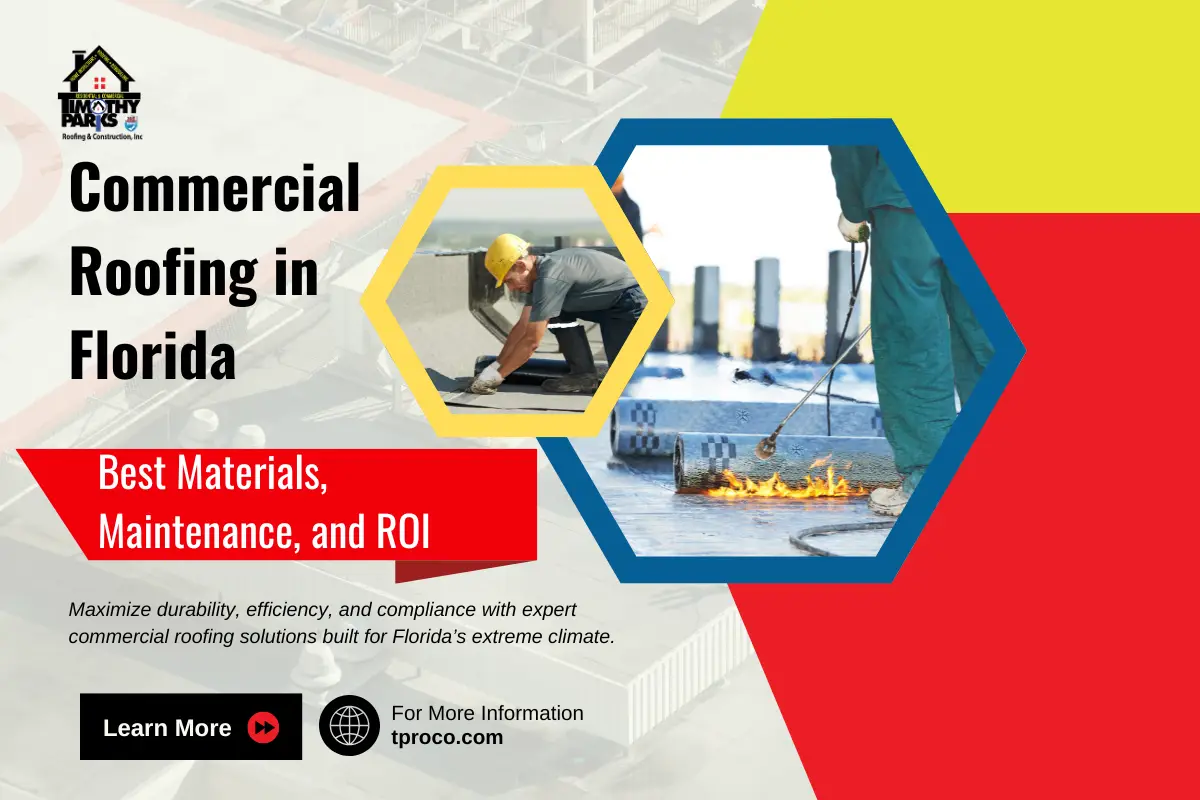
Commercial buildings in Florida face unique challenges—scorching sun, high humidity, and the ever-present threat of tropical storms or hurricanes. As a business owner or property manager, the roof is likely one of your most significant investments. After all, it protects inventory, equipment, and personnel from the elements. But how can you ensure your roof stands the test of time, meets state codes, and maximizes your ROI? In this blog, we’ll explore everything you need to know about commercial roofing in Florida: from selecting the best materials to establishing an effective maintenance schedule. Whether you manage a small retail store or a sprawling industrial complex, these insights will help you safeguard your bottom line and keep operations running smoothly.
The High Stakes of Commercial Roofing
A commercial roof isn’t just a protective cover—it’s a critical component of building safety and longevity. In Florida, the stakes are even higher due to environmental factors and strict building codes:
Severe Weather Threats
Hurricanes & Tropical Storms: Intense winds can loosen or tear away roofing materials. Wind-driven rain can infiltrate small gaps, leading to substantial interior damage.
Year-Round Sun Exposure: Florida’s UV levels accelerate roof aging, making it crucial to choose materials resistant to sunlight and heat.
Financial Consequences
Business Interruptions: A compromised roof might force partial or total shutdowns, costing you revenue.
Insurance Claims & Premiums: Proper maintenance and using top-tier materials can lead to lower insurance premiums. On the flip side, repeated claims or subpar roofs can spike your costs.
Regulatory Compliance
Building Codes: Commercial structures often face stricter guidelines, especially in coastal regions.
Roofing Permits: Larger or more complex installations typically require thorough inspections to confirm code compliance.
Best Roofing Materials for Florida Commercial Properties
Single-Ply Membranes (TPO, PVC, EPDM)
TPO (Thermoplastic Polyolefin):
Reflective and energy-efficient, ideal for minimizing AC loads in the Florida heat.
Welded seams create a watertight barrier.
PVC (Polyvinyl Chloride):
Known for chemical resistance—suitable for restaurants, manufacturing plants, or facilities handling grease and oils.
Strong seam strength, but typically costlier than TPO.
EPDM (Ethylene Propylene Diene Terpolymer):
Durable and flexible, performs well under temperature fluctuations.
Less reflective unless you choose a white coating.
Modified Bitumen (Mod-Bit)
Reinforced Layers: Commonly fused with fiberglass or polyester for added strength.
Resilience: Adaptable to foot traffic, making it popular for buildings needing frequent rooftop access for HVAC equipment.
Waterproofing: Multiple layers enhance water resistance—vital in Florida’s rainy seasons.
Metal Roofing
Longevity: High-grade metal roofs can last 40+ years when properly maintained.
Reflectivity: Helps reduce solar heat gain, cutting cooling costs.
Wind Resistance: Standing-seam metal roofs are often rated for high wind uplift, a key advantage in hurricane-prone areas.
Built-Up Roofing (BUR)
Multiple Layers: Involves alternating bitumen and reinforcing fabrics, topped with gravel or a reflective coating.
Proven Track Record: BUR systems have been used for over a century; many building owners trust this tried-and-true approach.
Maintenance Intensive: May need periodic inspection to ensure gravel remains evenly distributed and layers stay watertight.
Key Considerations for Maximizing ROI
Upfront vs. Life-Cycle Cost
Investing more initially in high-quality materials often yields lower repair expenses and a longer roof lifespan.
🔍 Pro Tip: Calculate total cost of ownership (TCO) over 20–30 years to see the full picture.
Energy Efficiency
Reflective Surfaces: White or light-colored membranes can reflect up to 80% of solar radiation, easing the load on HVAC systems.
Insulation & Ventilation: Proper insulation lowers heating/cooling costs and prevents condensation issues, which could degrade the roof deck.
Regular Inspections & Maintenance
Routine Checks: Schedule roof inspections at least twice a year and after major storms.
Preventative Repairs: Sealing small cracks or replacing worn flashing can avert expensive leaks and structural damage.
Documentation: Keep detailed records of inspections, repairs, and material warranties—helpful for insurance claims and prospective buyers.
Professional Installation
Licensed Contractors: Ensure your roofing company is licensed, insured, and familiar with Florida’s building codes.
Contract Clauses: Look for labor warranties covering workmanship for a set duration.
Key Considerations for Maximizing ROI
Upfront vs. Life-Cycle Cost
Investing more initially in high-quality materials often yields lower repair expenses and a longer roof lifespan.
🔍 Pro Tip: Calculate total cost of ownership (TCO) over 20–30 years to see the full picture.
Energy Efficiency
Reflective Surfaces: White or light-colored membranes can reflect up to 80% of solar radiation, easing the load on HVAC systems.
Insulation & Ventilation: Proper insulation lowers heating/cooling costs and prevents condensation issues, which could degrade the roof deck.
Regular Inspections & Maintenance
Routine Checks: Schedule roof inspections at least twice a year and after major storms.
Preventative Repairs: Sealing small cracks or replacing worn flashing can avert expensive leaks and structural damage.
Documentation: Keep detailed records of inspections, repairs, and material warranties—helpful for insurance claims and prospective buyers.
Professional Installation
Licensed Contractors: Ensure your roofing company is licensed, insured, and familiar with Florida’s building codes.
Contract Clauses: Look for labor warranties covering workmanship for a set duration.
🏢 Conclusion
Florida’s commercial roofing environment demands careful planning, robust materials, and consistent maintenance. Given the state’s climate extremes and strict building codes, selecting high-quality solutions upfront will safeguard your business from major headaches—and expenses—down the line. Whether you opt for single-ply TPO, a metal roof, or a time-tested BUR system, the overarching strategy should focus on preventive care and professional execution. Remember, a well-maintained roof isn’t just an operational necessity; it’s also a competitive advantage, providing comfort, safety, and peace of mind for everyone under it.
Frequently Asked Questions (FAQ)
1How often should a commercial roof be inspected in Florida?Ideally, schedule inspections twice a year—once in the fall before the dry season and once in spring. You should also inspect the roof after major storms to catch any hidden damage.2Can I install solar panels on a commercial building with a flat roof?Yes. Many flat roofing systems can accommodate solar panels, but make sure the roof is structurally sound and that the membrane is designed to handle additional foot traffic and weight.3How do I know if a roofing contractor is licensed in Florida?You can verify a contractor’s license by visiting the Florida Department of Business & Professional Regulation website. Always confirm they have relevant commercial roofing experience as well.4Are metal roofs too noisy for commercial buildings?Modern metal roofs include underlayments and insulation that significantly reduce noise. In most commercial settings, you’ll find noise levels comparable to other roofing types.5How long do commercial roofing warranties typically last?It varies based on the material and manufacturer. Single-ply membranes might have warranties up to 20–30 years, while metal roofing can offer coverage for 40 years or more. Always review the fine print for labor and material inclusions.Ready to Invest in a Better Roof?
Share your experiences, questions, or success stories with Florida commercial roofs below! Tag us on social media using:
#tproco #tppro #tprci #urro #rrfl
#CommercialRoofing #FloridaBusiness #RoofMaintenance#FloridaConstruction #TampaBuildings #OrlandoContractors
Schedule a Roof InspectionAbout the Author

Timothy Parks
CEO
Timothy Parks is a seasoned construction and roofing expert with over 45 years of industry experience. Having spent 29 years working in Florida, he holds three state licenses—CBC059592 (Builder), CCC1327217 (Roofer), and HI4878 (Home Inspector). When he isn’t safeguarding commercial and residential properties against Florida’s challenging climate, Timothy channels his passion for community by promoting mountain bike races in his local area.