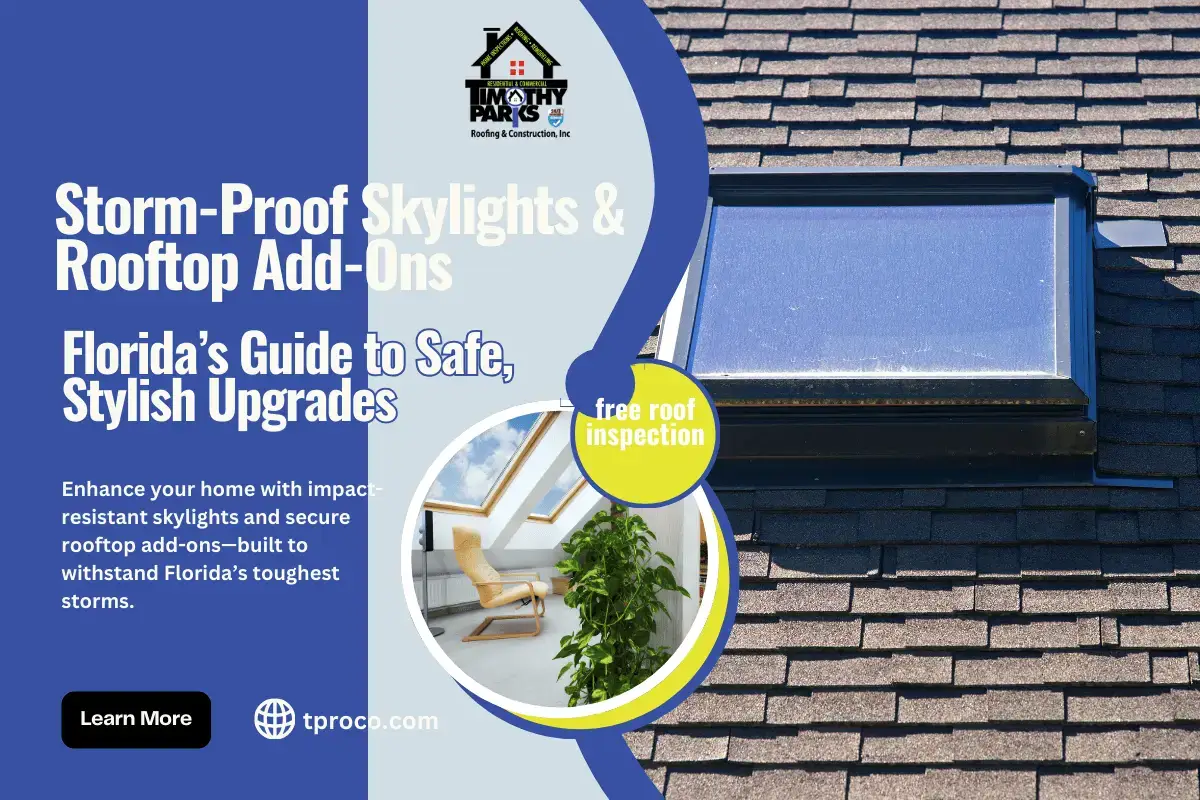
Adding skylights, satellite dishes, or even a small rooftop deck can instantly elevate a home’s comfort and style. But for Florida homeowners, these perks come with extra considerations—hurricanes and severe storms aren’t exactly friendly to fragile roof installations. So how do you strike a balance between modern amenities and robust storm protection? In this blog, we’ll dive into the best practices for installing rooftop add-ons, focusing on impact-resistant skylights, sturdy mounting systems, and weatherproof sealing methods. If you’re looking to enhance your home without undermining its resilience, read on to discover how to achieve both beauty and durability under the Florida sun.
Why Rooftop Add-Ons Demand Special Attention in Florida
Rooftop additions like skylights, decks, or even solar panels can do wonders for aesthetics, natural light, and energy savings. But Florida’s unpredictable weather means a carefully planned approach is essential:
1. Wind Resistance
Hurricane-Force Gusts: Parts and debris from poorly installed add-ons can become dangerous projectiles.
Code Compliance: Florida’s wind-borne debris region mandates stringent standards for exterior fixtures.
2. Water Intrusion
Sealing Vulnerabilities: Every new opening (e.g., skylight frame) is a potential leak point if not installed and sealed correctly.
Wind-Driven Rain: Heavy storms can push water sideways beneath poorly flashed edges.
3. UV & Heat Degradation
Sun Exposure: Skylight domes, metal brackets, and adhesives can degrade under intense UV radiation.
Temperature Swings: Florida’s daytime heat and cooler nights cause materials to expand and contract, stressing fasteners and seals.
Choosing the Right Skylight
Impact-Resistant Models
Laminated Glass: Contains an internal layer that holds shards in place if the glass cracks.
Polycarbonate Domes: Durable plastic that resists shattering, but may scratch or discolor over time without UV protection.
Wind & Debris Ratings: Look for skylights tested for 110–150 mph winds—whichever local codes require.
Glazing & Coatings
Low-E Coatings: Reduce heat transfer, keeping interiors cooler and energy bills lower.
Tinted or Reflective Films: Diminish UV damage to furniture while still letting in natural light.
Condensation Control: Double-glazed or triple-glazed skylights often have better insulation, reducing fogging in humid climates.
Curb-Mounted vs. Deck-Mounted
Curb-Mounted: Sits on a raised box (curb) that’s flashed separately; often easier to replace or upgrade.
Deck-Mounted: Mounted flush to the roof deck, often offering a lower profile.
Pro Tip: In high-wind areas, curb-mounted skylights sometimes offer more robust flashing options, but both can be storm-resistant if properly installed.
Installing Rooftop Add-Ons Securely
1. Professional Assessment
Structural Integrity: Adding a deck or heavy equipment (like an HVAC unit) requires verifying your roof can bear the load without risking structural failure.
Permit Requirements: Florida building codes often demand engineering approval and official permits for rooftop additions.
2. High-Quality Fasteners & Mounting Systems
Corrosion Resistance: Stainless steel or hot-dipped galvanized hardware resists rust, crucial in humid or coastal areas.
Wind-Rated Brackets: Seek products specifically tested for high-wind zones. Check for Florida Product Approval certifications.
3. Flashing & Sealants
Roof Penetrations: Satellite dishes, vents, or wiring conduits need specialized flashing to prevent leaks.
Tape & Membrane Systems: Many modern roofing membranes come with self-adhering tapes that create watertight seals around edges.
Regular Inspection: Sealants degrade over time, so schedule periodic checks to catch small leaks early.
4. Elevated or Protective Enclosures
HVAC & Ducting: Keep sensitive equipment off the roof surface or shielded by windbreaks to reduce damage.
Solar Panel Racking: Ensure the racking system is anchored to rafters or trusses, not just the sheathing.
Maintenance for Long-Term Reliability
Even the best skylight or rooftop addition won’t last if neglected in Florida’s harsh conditions:
1. Cleaning & Debris Removal
Gutters & Drains: Keep leaves, branches, and dirt clear to avoid water backup around skylight curbs or rooftop edges.
Surface Cleaning: Algae or dirt buildup can trap moisture on brackets or seals, accelerating corrosion or rot.
2. Check for Leaks & Cracks
Visual Inspections: Look for discoloration or damp spots on ceilings near skylights or rooftop add-ons.
Sealant Health: If you see cracking, peeling, or gaps, reapply or replace the sealant to prevent infiltration.
3. Re-Caulking & Re-Flashing
Regular Intervals: Harsh UV rays can degrade caulk. Inspect at least every couple of years—or annually if you’re near the coast.
Wind Damage: After significant storms, verify that flashing remains firmly in place and fasteners haven’t loosened.
4. Hardware Tightening
Expansion & Contraction: Temperature swings can loosen screws or bolts over time.
Annual Routine: Give all accessible hardware a quick turn to ensure everything is snug.
Conclusion
🌦️ Skylights and other rooftop add-ons can transform your home’s atmosphere and curb appeal—but in Florida, they must be installed with an eye on storm readiness. By choosing impact-resistant skylights, using high-quality fasteners, and following stringent flashing and sealing procedures, you can enjoy sunlight and fresh air without inviting leaks or structural risks. Regular maintenance remains essential: staying vigilant about cleaning debris, rechecking sealants, and tightening hardware goes a long way in ensuring everything stands up to Florida’s fierce weather. With the right approach, your roof can be a platform for creativity and convenience rather than a liability when the next storm rolls in.
Frequently Asked Questions (FAQ)
1Are all skylights in Florida required to be impact-resistant?In many high-wind or wind-borne debris zones, yes. Always check local building codes. Even if not strictly required, impact-resistant models are a wise choice for storm protection.2Can I retrofit an existing skylight to be more storm-proof?Sometimes you can add hurricane shutters or protective film, but replacing the skylight with an impact-rated model often provides the best protection.3Will installing a skylight raise my energy bills?Quality skylights with low-E glass can actually reduce lighting needs and help regulate indoor temperatures. Poorly insulated or older models, however, might increase heat gain.4Do rooftop add-ons affect my homeowners insurance?They can. Some insurers may offer discounts if your additions meet specific wind or impact standards. Others might raise premiums if the add-ons are considered a higher risk. Always notify your insurer of major modifications.5How often should I check the mounting hardware for rooftop antennas or satellite dishes?Aim for at least once a year, and always after a major storm. Temperature swings and high winds can loosen bolts, making them vulnerable to leaks or blow-offs.Elevate Your Home Safely!
Thinking about adding skylights, solar panels, or a rooftop deck? Share your experiences or plans in the comments below. And don’t forget to tag us on social media with:
#tproco #tppro #tprci #urro #rrfl
#Skylights #FloridaRoofing #HomeUpgrades#TampaHomes #OrlandoRenovation #SunshineStateLiving
Schedule a Roof InspectionAbout the Author

Timothy Parks
CEO
With 45+ years in construction and roofing—29 of them dedicated to Florida’s climate—Timothy Parks is a go-to source for both residential and commercial roof solutions. Licensed under CBC059592 (Builder), CCC1327217 (Roofer), and HI4878 (Home Inspector), Timothy balances technical expertise with a genuine commitment to his community, exemplified by his role as a mountain bike race promoter.