Small leaks can remain hidden for months in Florida’s warm, humid conditions, quietly soaking underlayment or pooling in attic corners until mold or rot appear. Traditional inspection methods—climbing onto the roof, checking the attic with a flashlight—sometimes miss these stealthy problem spots. Enter advanced leak detection tools like thermal imaging cameras, drones, and moisture meters. In this blog, we’ll explore how each technology pinpoints water intrusion earlier than ever before. Whether you’re a homeowner wanting peace of mind or a roofing pro seeking cutting-edge strategies, these methods help you stay ahead of Florida’s moisture challenges—saving time, money, and frustration down the road.
Why Traditional Methods Fall Short in Florida
In cooler, drier regions, leaks often show themselves quickly as water seeps through ceilings. But Florida’s climate allows slow evaporation, meaning water can linger and spread without obvious interior stains. Meanwhile, hot air trapped in attics might evaporate some drip trails, leaving only faint mold spore clusters or slightly damp insulation.
By the time a homeowner sees a musty smell or minor discoloration, significant damage may have been done to the decking or rafters. Ladder inspections can miss small cracks in shingles or subtle flashing gaps, particularly if water travels along beams away from the actual entry point. That’s why advanced diagnostics—scanning for temperature differentials or real-time moisture readings—play such a crucial role in unveiling hidden vulnerabilities long before they mushroom into major leaks in Florida’s environment.
Thermal Imaging Cameras: Spotting Temperature Variations
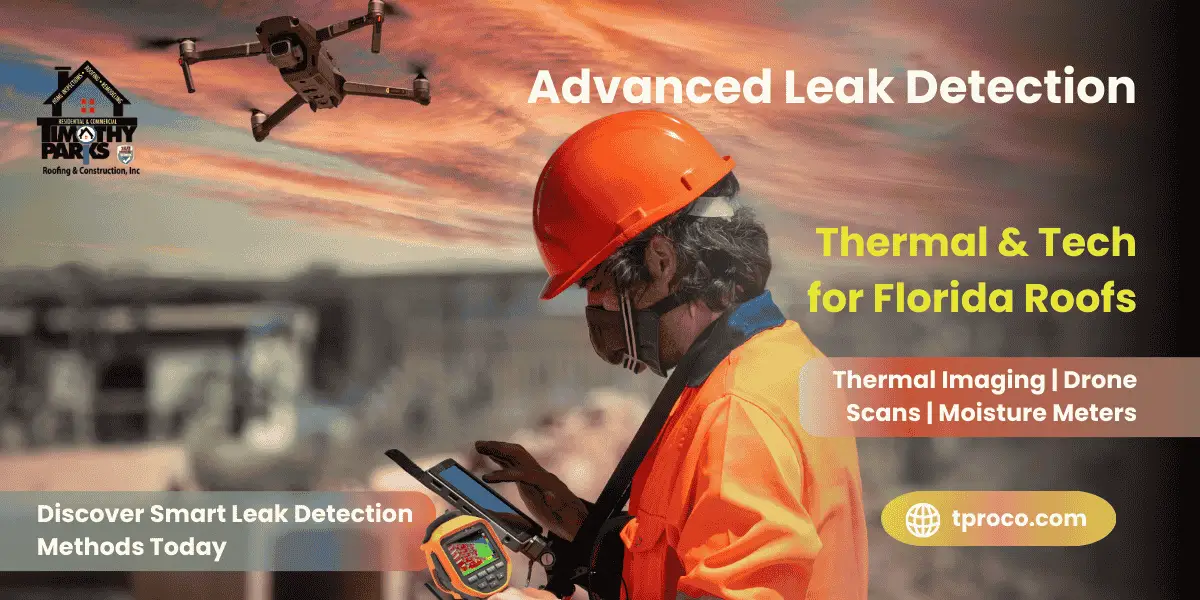
Thermal imaging (infrared) cameras detect subtle temperature differences on roof surfaces or attic materials. In Florida’s climate, damp areas stay cooler than drier surroundings. Key advantages:
Non-Invasive Scanning:
An inspector can walk the roof or attic, aiming an IR camera at questionable spots. Wet insulation or saturated decking registers as cooler “blue/purple” zones, while dry areas glow “yellow/red.”
Early Leak Detection:
If water seeps into a roof valley or between layers, the IR camera sees cooler patches that you’d never catch by eye, especially if the top shingle looks intact.
Evening/After-Sunset Efficiency:
Florida’s day heat saturates surfaces. In the evening, wet areas release heat more slowly. Scanning at the right time can highlight contrast vividly.
Limitations exist: reflective surfaces like metal can confound IR readings, and direct sunlight might mask cooler anomalies if done midday. Experienced technicians time scans for peak contrast—often a few hours after sundown when the roof cools more uniformly. Coupled with a moisture meter, thermal imaging can confirm potential wet zones for further inspection. If used regularly, it can catch micro leaks around flashings or skylights well before rotted decking or big interior stains appear.
Moisture Meters & Probing Tools
Once an IR scan flags a suspect zone, more precise moisture readings come from handheld meters:
- Pin-Type Meters: Two small probes insert into wood or drywall, measuring electrical resistance changes caused by water. High readings confirm dampness.
- Pinless Meters: Use electromagnetic signals to gauge moisture near the surface without puncturing materials—handy on finished ceilings.
- Probing Tools: If the meter spikes, a small drill test can check if wood is spongy. In Florida’s humidity, hidden mold often flourishes if moisture content remains above 20%.
By cross-referencing IR data with these direct moisture readings, you pinpoint infiltration sources accurately. This approach shines in Florida’s environment, where minimal but chronic wetness fosters mold behind walls or under shingles. A small fix now beats discovering rotted decking or compromised rafters months later.
Aerial Drone Inspections
Drones equipped with high-resolution or thermal cameras are another game-changer, especially for steep or complex Florida roofs:
- Access Hard-to-Reach Areas: Multi-story homes, turreted designs, or tile roofs with fragile surfaces become safer to assess by drone.
- Thermal Drone Surveys: Some advanced drones carry IR sensors for top-down scans, revealing cooler patches correlated with moisture.
- Detailed Imagery: Zoom-capable drones capture close-ups of cracked shingles, separated flashing, or hail dents without needing a ladder.
This vantage point can supplement attic checks, giving a holistic view of external trouble spots. Drone usage also reduces the risk of stepping on fragile tiles or misjudging a rotted deck area. Though licensing rules exist for commercial drone pilots, many Florida roofing pros incorporate drone surveys to produce comprehensive leak reports and highlight necessary repairs for clients or insurance adjusters.
Conclusion
🚀 Florida’s wet, warm conditions hide leaks far longer than drier climates, but modern tech tools—thermal imaging, moisture meters, drone surveys—now make it easier to track water intrusion early. By detecting subtle temperature shifts, pinpointing moisture content, or capturing high-definition aerial photos, homeowners and pros can stay one step ahead of rot, mold, and costly interior damage. If you suspect a hidden leak or your last storm triggered suspicious spots, leverage these advanced diagnostics for a precise fix. In the Sunshine State’s humidity, proactive scanning and targeted repairs mean the difference between minor patches and full-blown roof overhauls.
Frequently Asked Questions (FAQ)
1How accurate are thermal cameras on sunny metal roofs?Reflective surfaces can skew IR readings. Skilled inspectors often scan around dusk or use angle-specific techniques to reduce reflection.2Do I need special licensing to use a drone for personal roof checks?For commercial use, yes. Recreational flying on your own property is typically allowed, but local rules and safety guidelines apply.3Can IR scans see through roofing materials?They don’t see “through” them but detect surface temperature patterns that indicate underlying moisture differences.4Will a pin-type meter damage my ceiling?It leaves small holes. Some prefer pinless meters on finished surfaces. Pin-type is more accurate for wooden elements in the attic.5Is advanced detection expensive?Some roofers include it in their service. Paying for an IR or drone inspection can be cheaper than missing a hidden leak that leads to major repairs.🚀 Find Hidden Roof Leaks Before They Cause Damage!
Leaks can hide under the surface—thermal imaging, drones, and moisture meters reveal them before mold or rot sets in. Stay ahead with high-tech roof protection!
#tproco #tppro #tprci #urro #rrfl
#ThermalImaging #LeakDetection #FloridaTech #SunshineState #MiamiRoofScan #OrlandoDrones
Schedule a Roof InspectionAbout the Author

Timothy Parks
CEO
For 45+ years, Timothy Parks has blended hands-on roofing experience with emerging technologies—29 of those years under Florida’s punishing climate. Licensed (CBC059592, CCC1327217, HI4878), Timothy also once promoted the “Sparky’s D.IR.T. (Delve Into Rough Terrain)” MTB race in Rock Island, IL, showcasing his adaptability beyond construction. Today, he champions advanced leak detection—thermal cameras, drones, moisture meters—for pinpoint accuracy, urging Floridians to adopt these tools and catch hidden roof threats early before mold or rot escalate into significant home repairs.